Children's camp invitations: who wins the parents, kids on camera or the founder?
Two videos invited parents to a children's camp. One trusted the kids on screen to show. One trusted the founder to explain. They ran 1408 times apart.
Why I tested this
I came across these two videos through Anya Gal, a Russian Reels marketer I follow. She paired them in a side-by-side on her account. One had pulled millions of views, the other a few hundred. Same offer, a children's camp. Opposite outcomes.
But which second decided? What did real viewer attention actually do in the first seconds of each one? Where did the gaze land, on which element, and which exact second did the audience decide to stay or swipe?
So I ran both videos through Jeena. Real viewers, front camera on, attention tracked frame by frame, recall surveyed at the end. The patterns lined up with Anya's read. The data added the second-by-second layer underneath: which second the gaze split, which on-screen element pulled attention off the speaker, which moment the wow-reaction fired. Here is what the camera saw.
The setup
Both videos targeted the same job. Get parents who are already half-considering summer camp for their kids to remember this specific camp and feel a small pull toward signing up. Same goal, same season, same general audience.
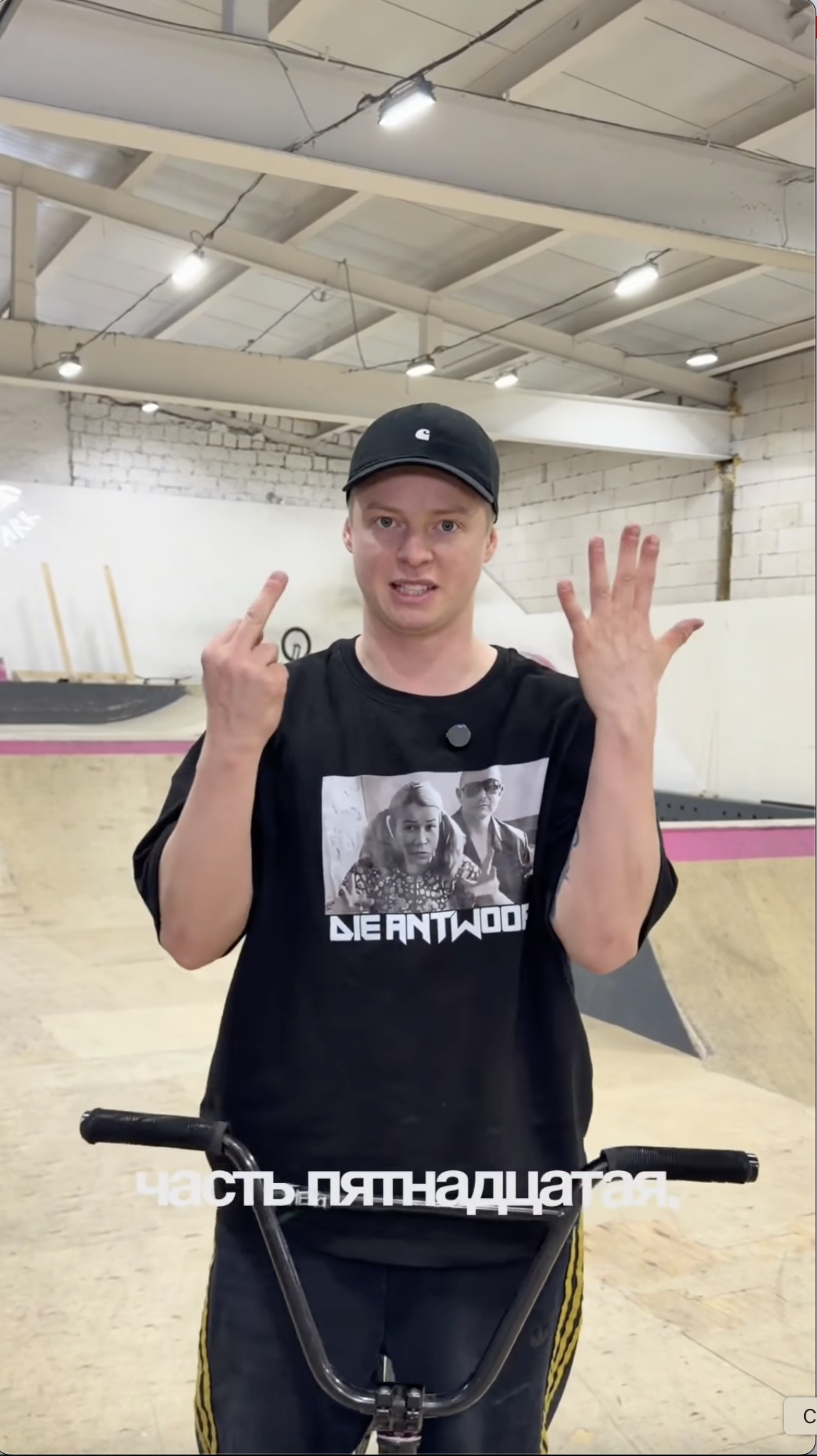
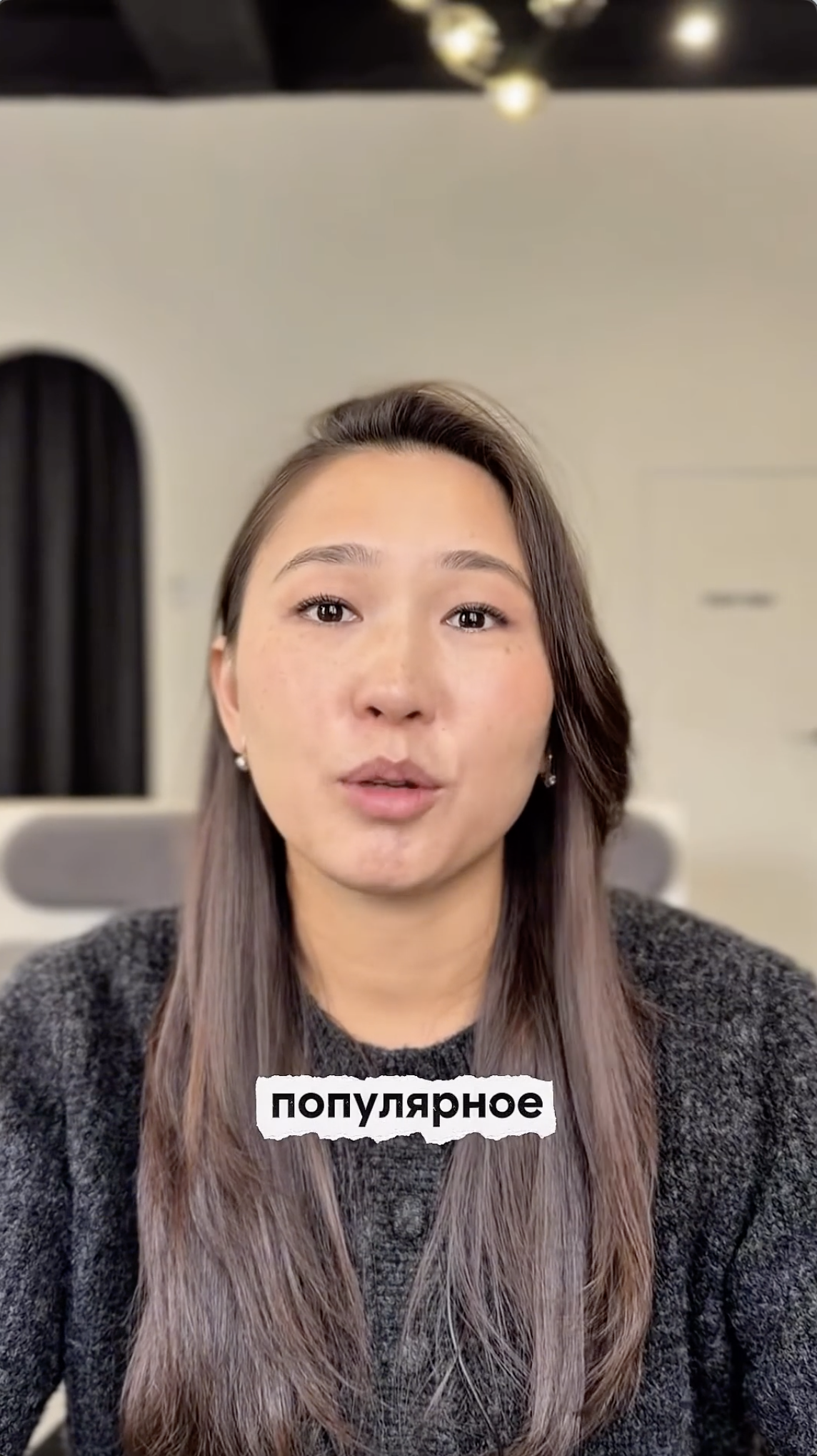
The kid-led one opened with the founder himself, a young-looking man who arrived by jumping off a scooter, and started talking to camera. Within a few seconds the screen handed off to kid reactions and quick montage cuts. The founder-led one opened with a face close-up of the founder, already seated, with bold text overlay, then settled into a sustained presenting segment with brand and discount information shown directly on screen. Both started with the founder. They did very different things with the next few seconds.
Jeena watched both with real viewers on their phones, front camera on. The platform tracks where the gaze lands frame by frame, flags moments of surprise from facial expression (eyebrow raises), and collects a short impressions survey at the end.
What Jeena saw
The kid-led montage
Host opener, then kids
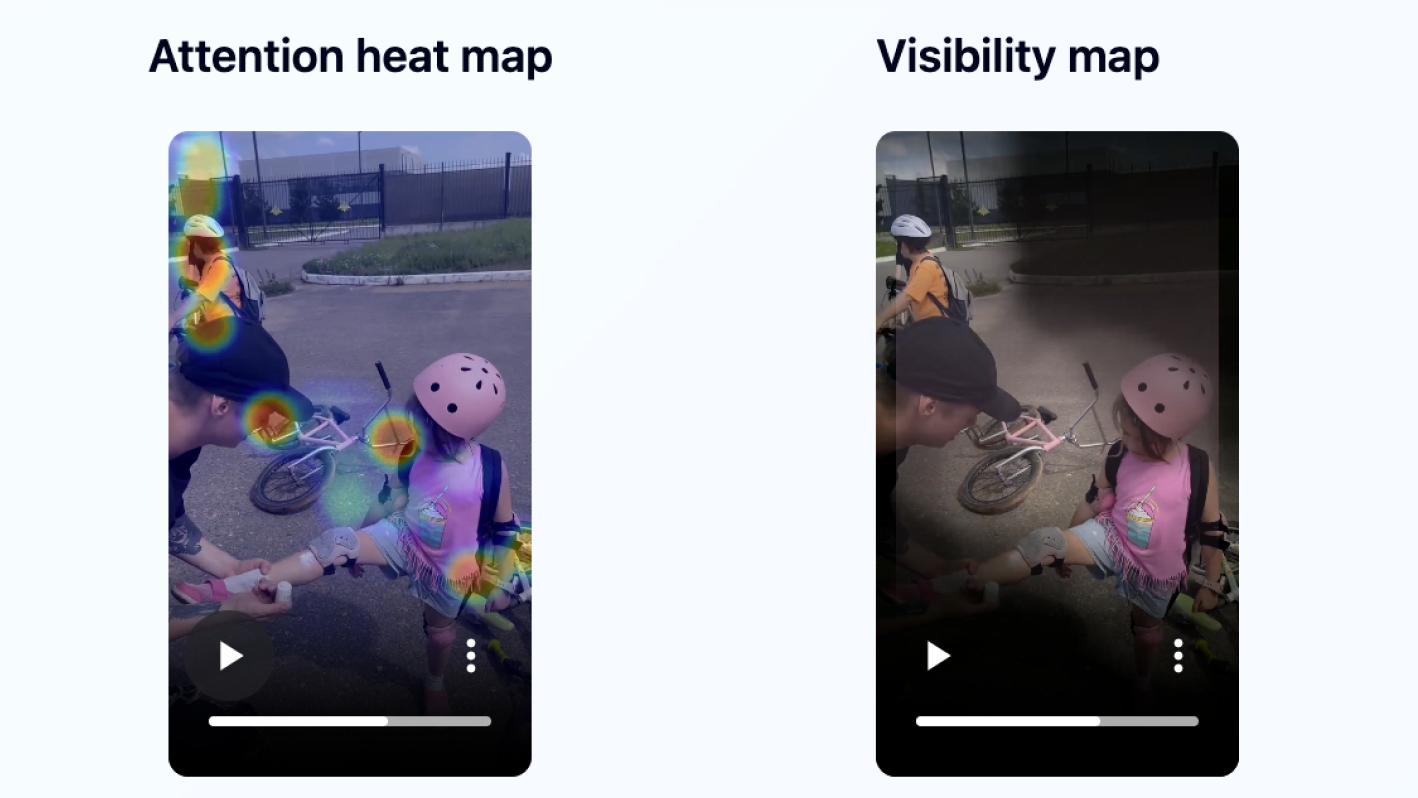
- •Opener (0 to 3 seconds): gaze locked onto the founder's motion at the scooter entry; the wow-moments chart fired clear early reactions in the first three seconds.
- •The wow-moments chart re-fired on the kid close-ups around 18 to 24 seconds and 40 to 48 seconds, and the post-watch survey tagged those beats as funny.
- •Attention dipped on the longer mid-montage cuts (the muddy-forest sequence around 8 to 18 seconds, and the mixed montage 24 to 34 seconds); viewers looked away in those windows.
- •In the final segment (48 to 52 seconds), off-screen gaze ran close to 61%, a fade despite the positive overall impression.
- •Post-watch survey described the video as funny, catchy, memorable; the emotional read was mostly amused.
The founder pitch
Face close-up, sustained
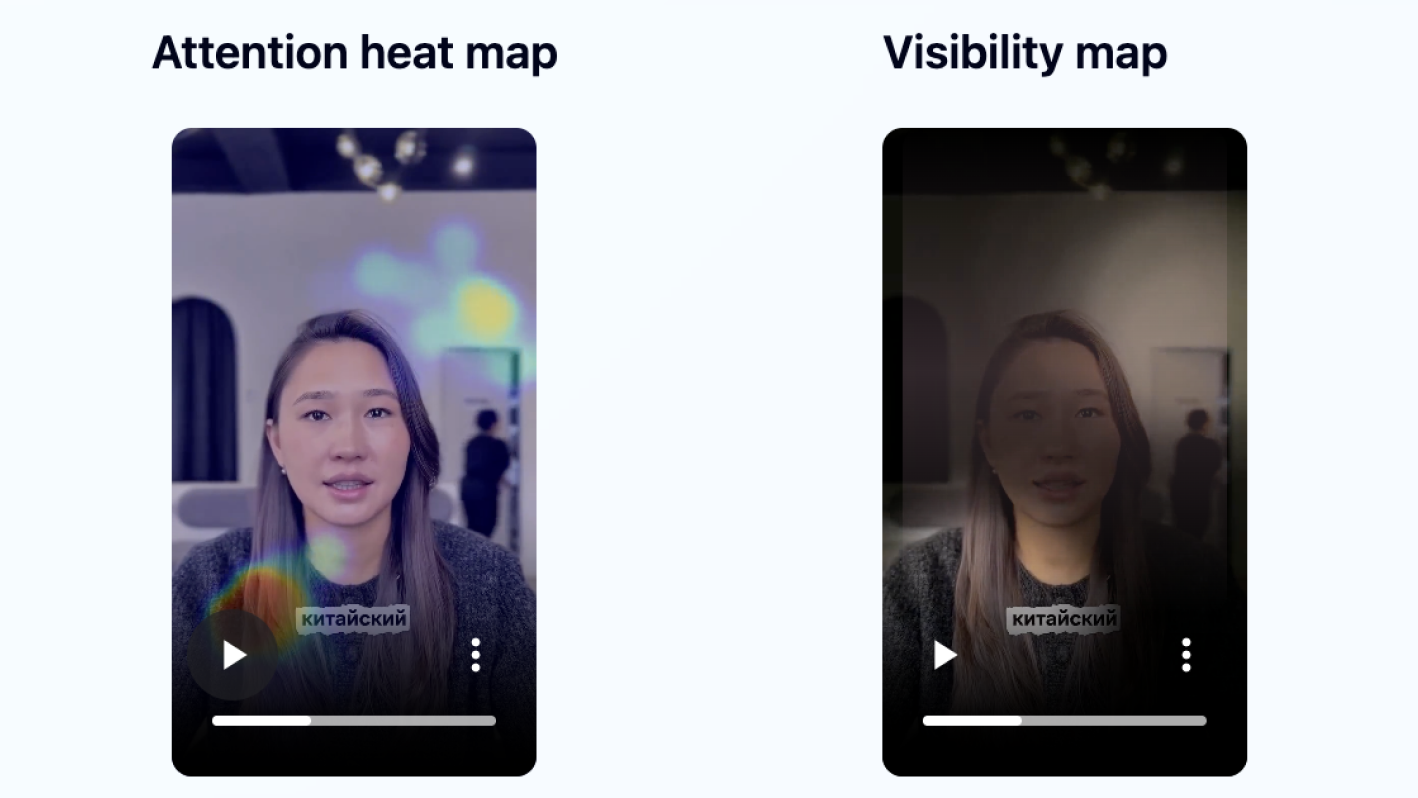
- •Opener (0 to 3 seconds): gaze split between the face close-up and the bold Russian text overlay, with no single anchor in the first three seconds.
- •Across the long static segment (0 to 38 seconds), gaze landed on the white interior wall behind the speaker more often than on the speaker herself.
- •Blink rate ran higher than baseline through the runtime, a falling-focus signal.
- •The wow-moments chart showed only a few brief, mild reactions; no recurring engagement peaks.
- •Post-watch survey described the video as bored and distracted; the message landed sporadically and required effort to stay with.
Same setup, different shapes
Neither video was technically broken. Both opened cleanly. Both made the offer plain. Both could have been the polished entry from a competent small-business account.
And yet what happened next on social was very different.
What happened in the wild
| Kid-led montage | Founder pitch | Δ | |
|---|---|---|---|
| Views | 2.4M | 1.7k | ×1408 |
| Likes | 703.0k | 55 | ×12782 |
| Comments | 8.2k | 19 | ×433 |
| Shares | 346.0k | 5 | ×69200 |
| Reposts | 10.5k | — | — |
The aha
1408 times the views. 12782 times the likes. 69200 times the shares. Same offer, same season, same kind of parent audience.
The split is not about production quality. It is about which currency the video traded in. The kid-led version sold proof, in the form of children having a great time. The founder version sold information, in the form of a founder explaining the offer. The cleanest piece of evidence is the wall: for 38 seconds, viewers' gaze landed on the white interior wall behind the founder more often than on the founder herself. The eye keeps looking for something to watch. When the video does not give it a demonstration, the eye picks the wall.
For a category like a children's camp, where parents are buying a feeling about safety and joy more than a feature list, proof and information are not the same currency. Proof is shareable. Information is forwardable, at best. The numbers reflect that gap.
Watching children have fun is the demonstration. Watching the founder explain is the brochure.
Four creative choices that drove the split
How the founder entered the first second
The founder entered with motion. He jumped off a scooter and started talking. The eye locked onto the action before the words mattered.
The founder was already seated and immediately speaking, with a bold text overlay competing for the eye. Two static elements asking for attention at the same time.
Both videos opened with the founder. The kinetic entry earned higher early reaction signal in Jeena's wow-moments chart. The static-plus-text opener showed earlier look-aways as the eye negotiated where to land.
How attention was sustained
Kid close-ups around 18 to 24 seconds and 40 to 48 seconds acted as recurring emotional recovery beats. Some mid-montage cuts had attention dips, but the next kid moment pulled gaze back.
A 38-second static segment with no recovery beat. The white interior wall behind the founder visibly competed with the founder for gaze across the whole segment.
Even the winning video had attention dips in the middle. It recovered them on the next kid close-up. The losing video had no recovery beat for 38 seconds, so the wall won the gaze.
What kind of proof the video offered
Playful child moments stood in as proof that the camp delivers fun. Emotional proof.
Brand name, discount, and offer were shown on screen as proof that the offer is real. Informational proof.
Survey responses lined up with the gaze and facial-expression data. The kid-led video was described as funny, catchy, memorable, with viewers mostly amused. The founder video was described as bored and distracting, with blink rate running above baseline.
What made the video shareable
Funny, kid-centred payoff moments that a parent could send to another parent without explaining anything.
Clear but effortful information that a viewer would have to summarise before sharing.
The shares delta (×69200) is the biggest in this case. Shareability is downstream of low effort. A kid laughing forwards without context. A discount with a founder face needs context to land.
Three transferable principles for trust-and-excitement categories
Sell the demonstration, not the explanation
For categories where the buyer is buying a feeling (a camp, a wedding venue, a restaurant, a clinic), the explanation of the offer is downstream of the demonstration of the experience. Show the experience, in real moments, with the people who would be having it. Save the explanation for the caption.
If the founder is on camera, the energy of the opener decides whether viewers stay
A founder entering with motion (jumping into the frame, gesturing, walking into the shot) gives the eye something to track before the words land. A founder already seated, talking to camera while text scrolls underneath, asks the eye to do two jobs at once and loses early. If the founder has to be the main vehicle past the opener, build in a pattern interrupt every four seconds at most (a cutaway, a zoom, a word pop), so the eye keeps re-anchoring on the speaker rather than wandering to the wall.
Build the shareable beat around the buyer's buyer
A parent shares a camp video because of the kids in it, not because of the founder. A bride shares a wedding venue video because of the bride in it. The shareable moment is the moment that lets the viewer picture the person they are buying for in the experience. Land it once around the 20-second mark, then again before the loop closes. The winning video here hit its kid close-ups at 18 to 24 seconds and again at 40 to 48 seconds. Two emotional anchors. Two chances for the viewer to feel the share.
What this means if you make these videos
If you sell to parents (or to anyone buying on behalf of someone else), the temptation is to make the cleanest possible founder pitch. Clear words. Calm voice. Brand visible. Discount visible. That instinct is right for a sales call. It is wrong for a short-form invitation in a feed.
A short-form invitation runs on demonstration, not explanation. The parent is not researching yet, they are scrolling. The frame that makes them stop is the frame that shows the kid having a great time. The frame that makes them share is the frame that shows the kid they could send. The frame that makes them sign up later is the frame that left an emotional residue, not the one that delivered the price.
A founder-on-camera invitation can still work. It needs a faster cut rhythm, a background that the eye cannot wander onto, and a pivot to demonstration footage well before the half-way mark. Cleanliness alone is not the lever. Whether the parent felt something is.
Test your own camp, course, or service invitation before you post
You can run this exact analysis on your own video. Upload it to Jeena. Real viewers watch it on their phones, with the front camera on, and share their impressions in a short survey afterward. Jeena maps where their eyes went, when they raised their eyebrows, and which moments lost them. You get an attention heatmap, a visibility map, a wow-moments chart, and three concrete recommendations.
No "schedule a call." No sales rep. Upload, get your report in a couple of days.
Frequently asked
Why did the kid-led invitation outperform the founder pitch by 1408 times?+
Both videos targeted the same parents with the same offer. Jeena's eye tracking shows the gap opened in the opening seconds and widened across the static founder-presenting segment. The kid-led video used kid close-ups around 18 to 24 seconds and 40 to 48 seconds as emotional recovery beats; even where attention dipped in between, the next kid moment pulled gaze back. The founder video held one frame for 38 seconds with no recovery beat, and viewer gaze leaked onto the white interior wall behind the founder. Shares (the metric with the biggest gap, ×69200) followed the emotional proof of the kid moments, because a kid laughing is shareable without context. A founder explaining an offer is not.
Is there a case for the founder being on camera for a kids' camp invitation?+
Both videos in this case opened with the founder, so the question is not whether to use a founder opener but how. The winning video used a kinetic founder entry (the founder jumped off a scooter and started talking) and handed off to kid montage within a few seconds. The losing video used a static seated shot and stayed on the founder for most of the runtime. So a founder opener is not the problem. A static founder opener that does not hand off to demonstration footage is. If the founder is on camera, give the eye something to track (motion, a gesture, an entry into frame) and pivot to the experience within about four seconds.
Why is eye tracking the right tool for this question?+
A view count tells you the founder-pitch video underperformed. It cannot tell you which second the viewer disengaged or which on-screen element pulled their gaze off the speaker. The "white interior wall competing with the speaker" finding is invisible to a dashboard but obvious in a heatmap. Jeena watches viewers watch, frame by frame, with phone front-camera gaze tracking. That is the level of detail you need to know whether the problem is the script, the opener, the background, or the cut rhythm.
What is Jeena?+
Jeena is a neuromarketing platform for short-form video. Real people watch your video on their phone with the front camera on. Jeena captures their gaze direction, blink rate, eyebrow raises, and their impressions of the video in a short survey afterward. You receive an AI-powered report with an attention heatmap, a visibility map, a wow-moments chart, and three specific recommendations for making the video work harder.
How does Jeena measure viewer attention?+
Jeena uses smartphone front-camera gaze tracking. Each engager calibrates once, then watches your video. The platform records where their gaze lands frame by frame, flags moments of surprise from facial expression, and combines that with a post-watch survey. The result is a per-second timeline of what real viewers actually looked at and felt.
Can I test my own camp or service invitation on Jeena?+
Yes. Sign up, upload your video, set a goal (Views, Sales, Pitch, Followers, and so on), and Jeena runs the test with its panel of engagers. The report typically arrives within a couple of days, with an attention heatmap, a visibility map, a wow-moments chart, and three concrete creative recommendations.
How much does it cost?+
A typical test costs around ten euros. See the pricing page for current rates.