Two €0-budget videos tested almost the same. One got 2.7M views, the other 5,444.
Same play, same budget, same joke. Jeena came back a near-tie on both survey and reactions. Then one out-reached the other by 496 times. This is what that gap is actually made of.

Why I tested this
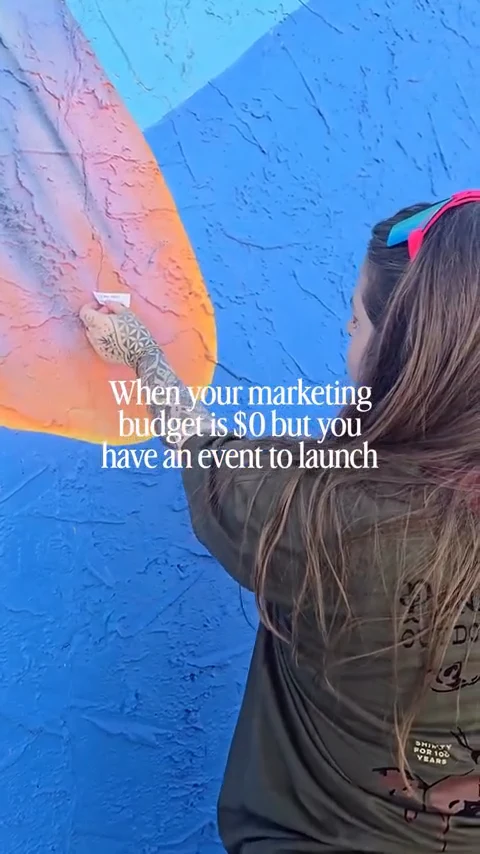
Two creators had the same idea in the same window: your marketing budget is €0, so you take something tiny out onto the street and film it stuck to a lot of surfaces. One filmed herself placing a handwritten "SAVE THE DATE" card on steps, on foliage, on an ornate wooden door, on a mosaic wall, cut together with shots of her painting a mural. The other filmed herself sticking a round "MILINNERY" brand sticker on a pole, a tree, a stucco wall, a brick wall, cut together with a designed card. Same hook on screen, "marketing budget: €0". Same rhythm of quick cuts. Both short.
One of them got 2.7 million views. The other got 5,444. That is 496 times the reach for what is, frame for frame, almost the same video. I did not have a theory. The two clips are close to interchangeable. So I ran both through Jeena to see whether the eye-tracking would show me the thing my eyes could not.
It did not. And that turned out to be the whole point.
The two videos, honestly
I want to be precise about how similar these are, because everything below depends on it. Neither is a produced video. Neither has a story, a face-to-camera pitch, or a build to a reveal. Both are the same short loop: a hand places a small circular object on a surface, the shot cuts to the same object on a different surface, repeat. The event video breaks up its loop with shots of the creator painting a mural. The sticker video breaks up its loop with a card that reads "marketing budget 0%, hope and delusion 100%, pls help, link in bio".
The only real difference between them is the object and what it says. One is a dated save-the-date. The other is a brand name and a joke about being broke. Hold onto that, because by the end it is the only difference left standing.
What Jeena measured
Jeena put each video in front of its own panel of real viewers watching on their phones with the front camera on, tracking where their eyes went, what made them react, and how they rated the clip afterward. If a 496x gap were a craft problem, this is exactly where it would surface: one video holding attention, the other leaking it.
That is not what came back. On nearly every measure, the two videos came back close to each other.
In the lab: a near tie
| The event video | The sticker run | |
|---|---|---|
| Survey score | 4.2 / 5 | 3.7 / 5 |
| Survey words | "surprising", "interesting" | "funny", "catchy", some "boring" |
| Opening seconds | Curiosity hook landed | Curiosity hook landed |
| Middle of the video | Some viewers drifted | Some viewers drifted |
| Strongest reaction | A small wow peak, around 0.2 | A small wow peak, around 0.4 near 9s |
What Jeena saw in each
The event video
Save-the-date, on rotating surfaces
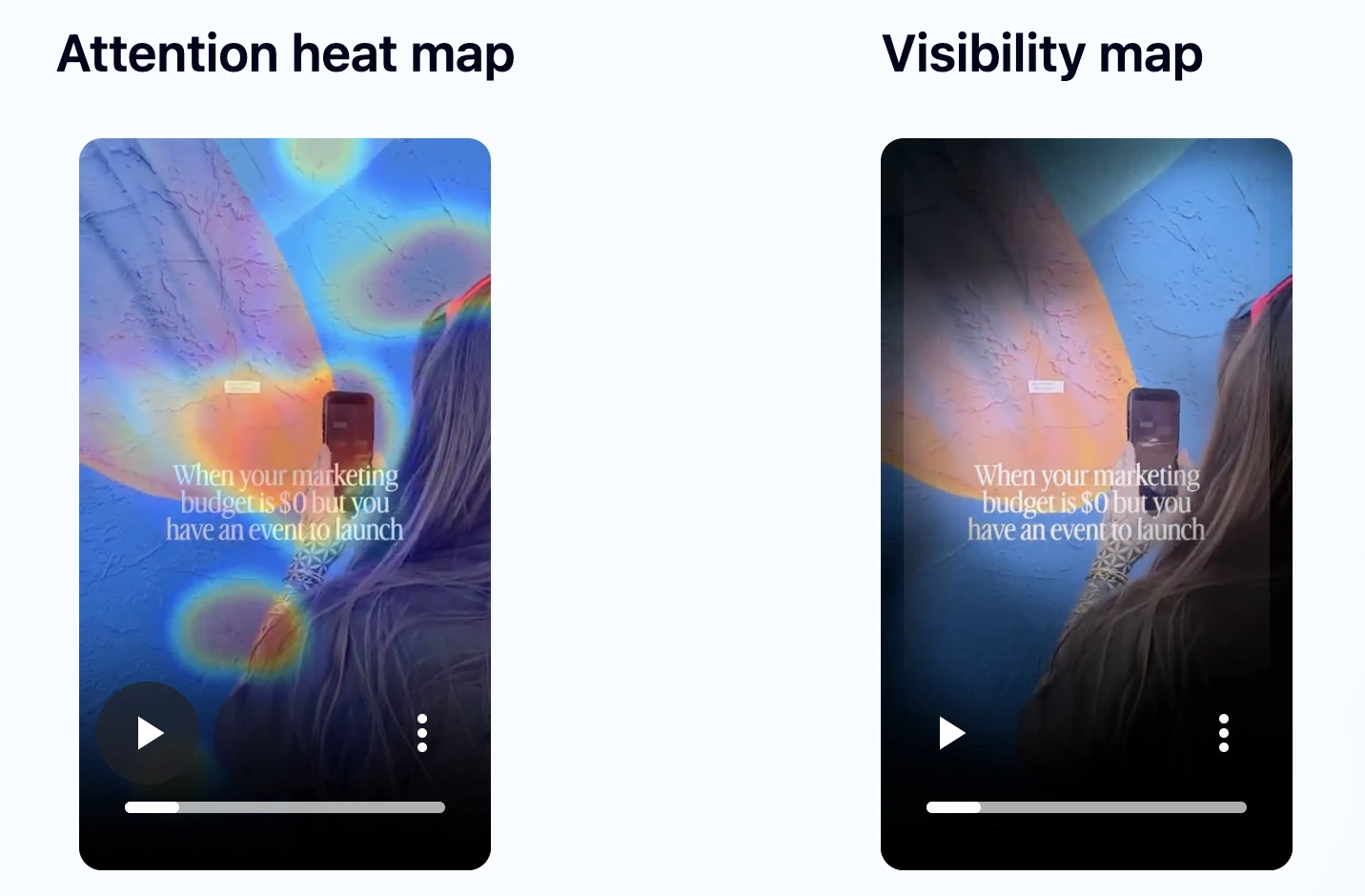
- •The opener landed. The "marketing budget: €0" premise drew an early reaction and pulled eyes onto the frame, and viewers tagged it "surprising" and "interesting".
- •The handwritten "SAVE THE DATE" note was legible and clearly the point. Viewers read it.
- •Attention was not fully sustained. Several viewers glanced away during the repetitive surface-to-surface shots in the middle.
- •The strongest reaction was small, a wow peak of around 0.2. Survey score 4.2. A solid, well-received clip.
The sticker run
Brand sticker, on rotating surfaces
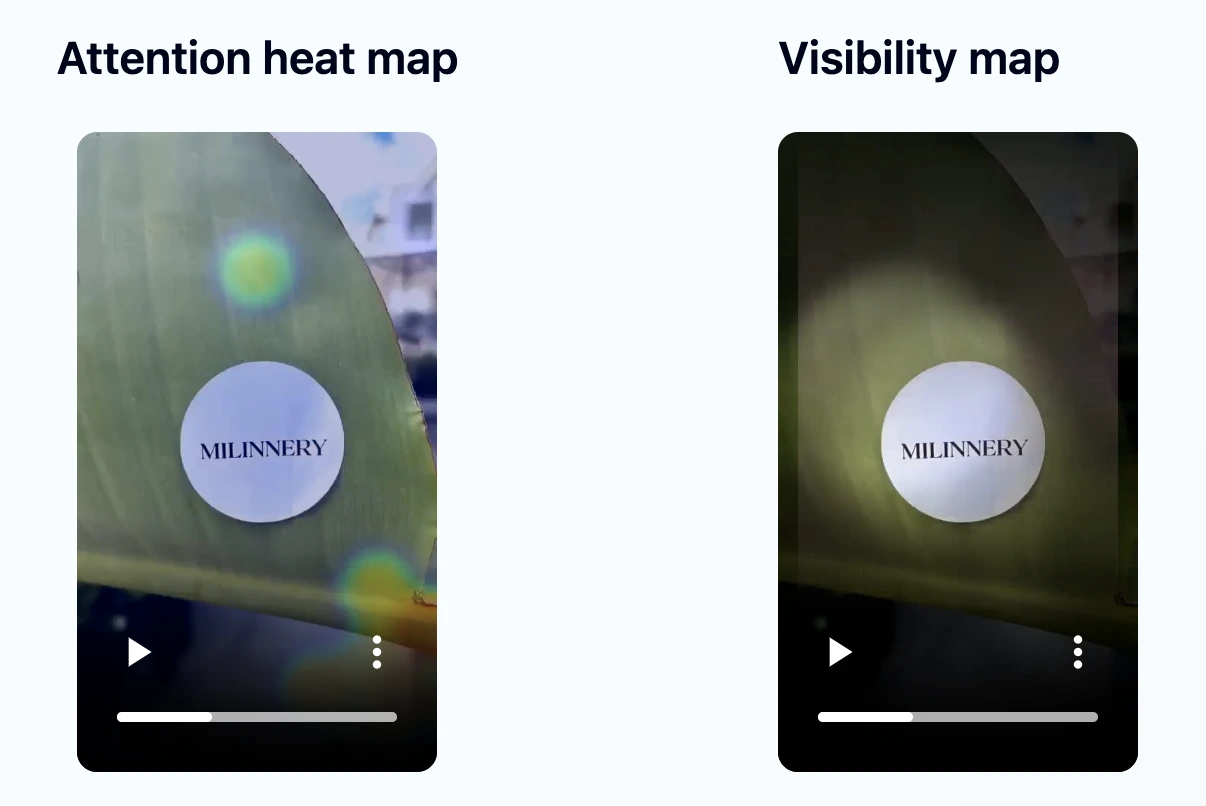
- •The opener landed here too. The "marketing budget: €0" hook registered and viewers tagged the clip "funny" and "catchy".
- •The strongest reaction, a small wow peak of around 0.4, came from the sticker close-ups around the nine-second mark, and the final "pls help" card held attention when it appeared.
- •Attention was shaky in between: a high blink rate and frequent look-aways through the handheld middle.
- •Survey score 3.7. Modest but real appeal, "funny" and "catchy" with a few "boring".
Same shape, both times
Read those two columns again. A curiosity opener that lands. A middle where attention wobbles. A single small reaction bump around the nine-second mark. A positive but not glowing survey. That is not a description of one video. It is a description of both. Jeena looked at the eventual hit and the one that barely moved and essentially shrugged: two decent, near-identical clips.
In the wild: 496 times apart
| The event video | The sticker run | Δ | |
|---|---|---|---|
| Views | 2,700,000 | 5,444 | ×496 |
| Likes | 83,434 | 100 | ×834 |
| Comments | 338 | 12 | ×28 |
| Shares | 31,200 | 47 | ×664 |
| Reposts | 324 | 7 | ×46 |
A near-tie in the lab, 496x in the wild
Half a point of survey score separated these videos, and the strongest reaction was small on both. Then one out-reached the other by 496 times on views and 664 times on shares. The honest conclusion is uncomfortable, and I think it is important: the eye-tracking could not explain this gap, because the gap is not made of attention.
Here is why that is worth paying for anyway. Both of these videos passed the attention test, which means the craft was not the problem and there was nothing to re-cut. When a video does leak attention, Jeena shows you the exact seconds to fix before you post. What it cannot measure is whether the idea was worth spreading, and on that question these two videos are not close at all.
So what actually separated them?
Since the attention data is a tie, the difference has to live in the one place the two videos genuinely diverge: the object and its message. And there the gap is enormous, even though it never appeared on a heatmap.
The event video hands you a real artifact. "SAVE THE DATE, SEP 17-18" is a specific, dated, slightly mysterious thing. It implies an actual event you are not in on yet, and it invites a concrete action: save it, find out what it is, tell the person you would bring. It is, quite literally, a save-worthy object. The 31,200 shares are not an accident of the edit. They are people forwarding a date.
The sticker video hands you a brand name and a bit about being broke. "MILINNERY, hope and delusion 100%, pls help, link in bio" is a funny, self-aware punchline. But there is nothing to save, nothing to find out, and the call to action is a plea. It earned laughs in the survey and 47 shares in the world. A joke you enjoy and a thing you forward are different currencies.
One caveat I will not hide: that last part is a marketer reading two videos, not a finding the eye-tracking produced. Jeena did not measure "how forwardable is the payoff". No attention test does. It is the most likely explanation for a gap the test could not see, and the share counts fit it, but it is a hypothesis, not a heatmap.
What this actually taught me
Attention testing de-risks the craft, not the idea
This is the real lesson, and it is a useful one. A test like this tells you whether your video holds attention and whether your message lands. Both of these videos passed that bar. What it will not tell you is whether the idea deserves to travel. If you treat a good attention score as a promise of reach, these two clips are the warning: same score, 496 times apart.
Give people a thing to forward, not a feeling to acknowledge
The winner gave viewers a dated, curiosity-loaded object they could literally save and pass on. The loser gave them a punchline they enjoyed and scrolled past. If shares are what you are after, the payoff has to survive on its own once it leaves your video: a date, a resource, a genuinely surprising or useful thing. Enjoyment and forwarding are not the same behavior, and only one of them shows up in your share count.
A 496x gap is almost never a craft gap
When two videos are made with the same skill and one dies, the problem sits upstream of the edit: the concept, the offer, the account, the timing. Recutting the weaker video with tighter pacing would not have moved it, because there was nothing wrong with the pacing. There was nothing to save.
The honest limits of this
The test does one job well: a panel of real viewers reads what held attention and what got a reaction, and that is enough to compare two videos on craft. It does not forecast reach. I do not know the two accounts, their follower counts, or how the algorithm chose to push each clip, and some of any 496x gap is the account and plain luck. I would be lying if I claimed to have isolated the creative from everything else.
What I can say is narrower but honest. The eye-tracking did not find a craft difference between these two videos, because there was not much of one to find. Both are competent. Only one of them handed the viewer something worth passing on. That is the part no camera on a phone can measure, and it is the part that moved 2.7 million people.
Find out what your video actually does to viewers
Upload your video to Jeena. Real viewers watch it on their phones with the front camera on, and you get an attention heatmap, a visibility map, a wow-moments timeline, a summary of how they perceived it, and three concrete recommendations. You see the exact seconds where attention slips, so you can fix the edit before you post. Jeena settles whether the craft is getting in the way; the idea is yours to get right.
A typical test costs around ten euros and arrives within a day.
Frequently asked
Why did two nearly identical zero-budget videos land 496 times apart?+
Because the difference was not in the craft, which is the only thing an attention test can see. In the lab the two came back near-identical: survey scores of 4.2 and 3.7, near-identical openers, a small strongest reaction on each, and the same mid-video attention drift. On attention, they are a tie. The gap was in the payoff: the winner handed viewers a dated "SAVE THE DATE" artifact worth saving and forwarding (31,200 shares), while the other handed them a brand sticker and a "pls help" joke (47 shares). One gave people a thing to pass on; the other gave them a punchline to enjoy and scroll past.
Can eye tracking predict whether a video will go viral?+
No, and this comparison is a clean example of why. Eye tracking measures whether a video holds attention and whether its message lands. Both of these videos passed that test almost identically. Virality also depends on the strength of the idea, how forwardable the payoff is, the account, timing, and luck, none of which a front-camera panel measures. What the test is genuinely good for is catching a video that fails on attention before you post it. It will not tell you the idea is a winner.
What is Jeena?+
Jeena is a neuromarketing platform for short-form video. Real people watch your video on their phone with the front camera on, and Jeena captures their gaze direction, blink rate, and eyebrow raises, plus a short post-watch survey. You get a report with a frame-by-frame attention heatmap, a visibility map, a wow-moments timeline, a summary of how viewers perceived the video, and three concrete recommendations for making it work harder.
How does Jeena measure viewer attention?+
With smartphone front-camera gaze tracking. Each viewer calibrates once, then watches your video while the camera records where their gaze lands frame by frame and flags eyebrow-raise reactions, combined with a short impressions survey afterward. The result is a per-second timeline of what real viewers actually looked at and reacted to, plus how they perceived the video overall.
How much does it cost to test a video on Jeena?+
A typical test costs around ten euros. See the pricing page for current rates.