Strong opinion is shareable. Offence ends your business. The line between them.
Why neutral content does not get shared, and the trigger spectrum that separates a sharp take from a self-inflicted wound.

Why I wrote this
A creator I know described their goal as wanting to post something that would get them cancelled in 98 countries. They were joking, but the underlying instinct is right and very few small-business owners I talk to are willing to say it. Muted content does not get shared. Polite, helpful, careful videos do well in retention numbers and badly in the part of the funnel that actually matters: the moment a viewer sends the video to a friend.
Surely there is a way to make content shareable without being inflammatory, I thought. There is. But it runs through territory most marketing advice avoids, because that territory is genuinely risky.
So this is the honest version. Strong opinion is shareable. Genuine offence ends your business. The line between them is not theoretical. It is the difference between a video that wins you 50 new followers and a video that loses you 500 customers.
Why muted content does not get reposted
The repost is the act of putting your name next to the video. Your followers are going to see that you shared it. The reposter has to feel that the video is worth that small social cost. A genuinely neutral video offers nothing for the reposter to attach to. It is fine. Fine is not a reason to put your name on it.
Reposted content always carries one of three energies: I agree with this, I want you to think about this, or this is funny enough to belong on my feed. All three require a position. A video with no position is unshareable not because it is bad, but because there is nothing for the reposter to identify with.
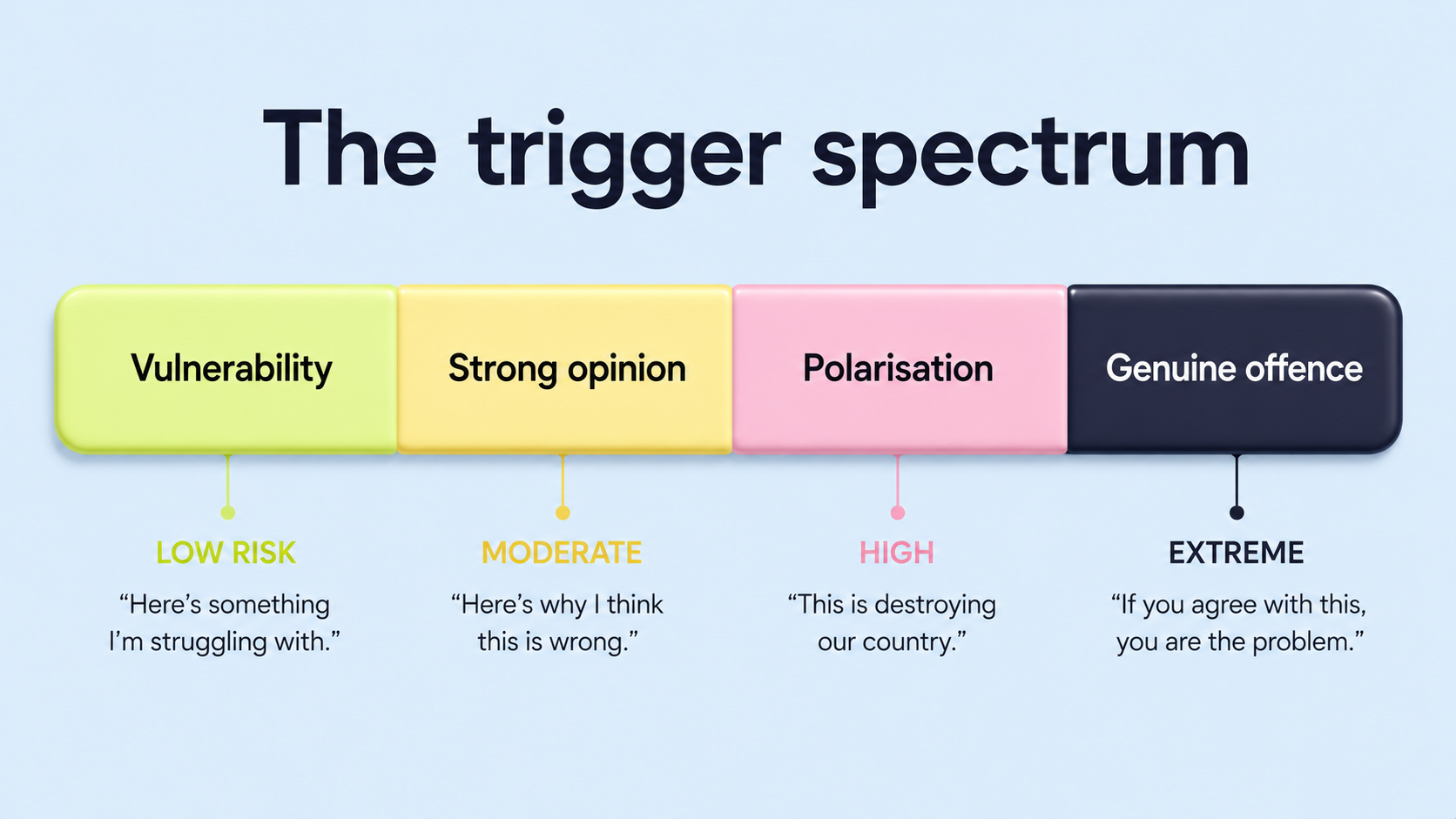
The trigger spectrum, in four steps
1. Vulnerability
You tell a story that admits something not flattering about yourself or your work. A near miss. A wrong call. A learning curve that is still in progress. Risk: very low. Most viewers respond with recognition and respect, and the small minority who use it against you are not your audience anyway. This is where most small businesses should start, because the upside is high and the downside is genuinely small.
2. Strong opinion
You say what you actually think about something specific in your field. Not "be authentic, be consistent." Something falsifiable: "most online skincare advice is wrong about this one thing." Risk: moderate. You will lose followers who disagree. The ones who stay become significantly more engaged, because they now know what you stand for. This is the workhorse of the spectrum and where most shareable small-business content lives.
3. Polarisation
You stake a position that you know roughly half the audience will reject loudly. "Most personal trainers should not be giving nutrition advice." Risk: high. You will get hostile comments and lose followers in real numbers. The upside is genuinely shareable content with strong reach, because both the agree and the disagree camps repost it. Only enter this zone if you have a real, defensible position and the stomach for the response. Do not enter it for engagement bait.
4. Genuine offence
You say something that crosses from "controversial position about your work" to "attack on people because of who they are." Risk: extreme. This is the zone where small businesses get cancelled and stay cancelled, because the response is not about your idea, it is about your character. Do not play here. There is no business upside that justifies the downside, and the spectrum has three lower-risk zones that produce shareable content without the existential risk.
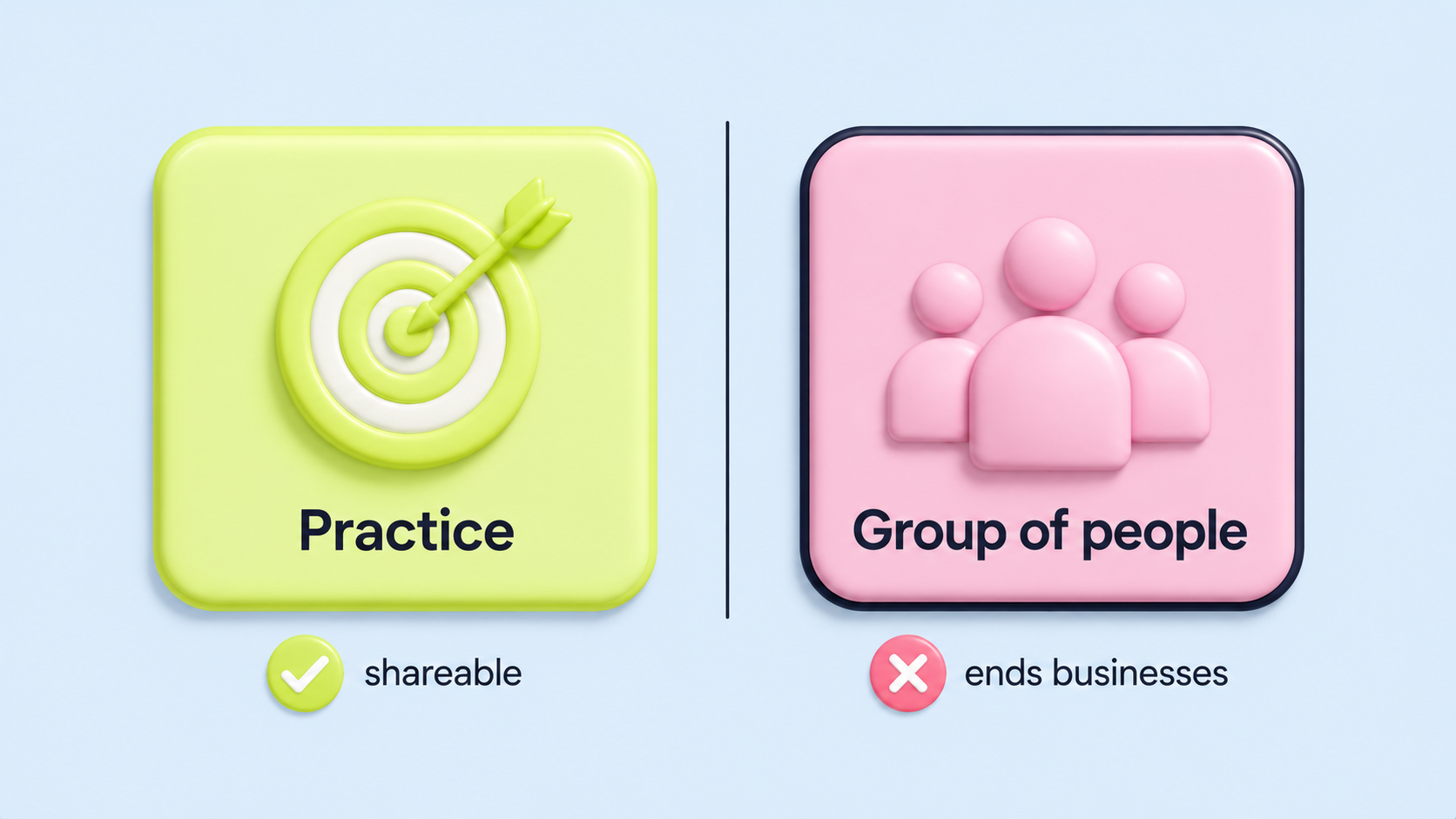
A controversial position about your work is shareable. An attack on people for who they are ends your business. These are not the same gear.
The test before you post a sharp take
Read your draft out loud, slowly. Then ask one question: is the thing I am criticising a practice, a belief, or a group of people? Practices and beliefs are fair targets and the response will be about the idea. Groups of people are not. The response will be about your character, and that response does not go away.
The most viral takes from small-business creators almost all criticise practices in their own industry. The most damaging takes almost all criticise people. The two look the same on paper. They are completely different in consequence.
How Jeena tells you whether the sharper version landed or recoiled
The trigger spectrum tells you where on the risk gradient a take sits. It does not tell you how viewers received this specific version of it. That second question is the one a Jeena report answers, and it is the one most likely to surprise you.
Run the safer version and the sharper version through the same panel of viewers. The three layers of the report line up against the three things that decide whether a sharp take is shareable or self-inflicted.
The three layers a sharp take has to clear
- Attention through the takeThe aggregated heatmap shows whether viewers stayed visually engaged through the sharp moment. A sharp take that drops attention immediately is being avoided, not absorbed. A sharp take that pulls attention up is doing the engagement work the safer version was not.
- Reaction at the sharp momentThe wow-moments chart shows whether viewers reacted at the sharp moment. An eyebrow raise registering surprise is shareable energy. A recoil is the same intensity moving the other way. Both look like a spike on the chart, which is why the perception layer matters.
- Perception in the words viewers useThe post-watch survey distils into a perception line. A sharper version that lands gets described with words like honest, bold, fresh, real. A sharper version that crossed gets described with words like rude, mean, cringe, aggressive. The descriptors are the verdict the share button cannot tell you in advance.
What the two reports usually reveal
The pattern that says ship the sharper version: held attention, reaction spike at the sharp beat, perception language clustered around "honest" or "bold." The pattern that says keep the safer version: dropped attention, reaction spike that nobody can quite name, perception language clustered around "harsh" or "off-putting."
The ambiguous case (held attention, mixed perception) is usually the polarisation zone working as designed. Half the panel describes it as bold, half describes it as too much. That is what shareable polarisation looks like. The decision is whether you want that argument to be the one your account is known for.
What this means if you are deciding whether to post the sharp version
Start at vulnerability and strong opinion. Almost every small business that thinks it has nothing shareable to say is sitting on stories from those two zones it has never tried. The vulnerability video about your worst client week. The strong opinion about the bad advice in your own industry. These get shared, and they do not cost you anything.
Move to polarisation only when you have a real position you have thought through, that you can defend out loud, and that targets a practice or a belief, not a group. The first polarising video should be one you would be comfortable defending in a follow-up video, because you will need to.
Do not go to genuine offence. There is no version of that calculation where the business comes out ahead. If you are about to post something and you cannot honestly tell whether it is on the polarisation side or the offence side, it is on the offence side. Do not post it.
See whether your sharper version actually lands before you publish
Film both versions of your video, the safer one and the sharper one, and upload them to Jeena. Real viewers watch them on their phones with the front camera on, and you see which one held attention longer, which one triggered the wow-moments chart, and which one viewers actually remembered and could repeat back in the survey. The two reports show you whether the sharper take landed as shareable or just as off-putting.
No "schedule a call." No sales rep. Upload, get your reports in a couple of days, decide before you post.
Frequently asked
Does a small business actually have to take strong positions to grow on short video?+
To grow distribution past your existing audience, yes. Reposts and shares require a viewer to attach their name to your video, and they need a reason to do that. A position they agree with, a story they recognise, or a take they want to argue with. Videos without any of those three perform fine for retention and badly for reach.
Where is the line between a strong opinion and offence?+
A strong opinion criticises a practice, a belief, or a piece of advice. An offence criticises people for who they are. The first invites a response about the idea, which is what shareable content does. The second invites a response about your character, which does not go away. If your take is about people rather than practice, it is on the wrong side of the line.
What if the polarising take is true but I lose customers over it?+
You will lose some, and the ones you lose were probably not going to stay anyway. The harder question is the ones who stay: are they becoming more engaged, or just louder. If the polarising content reliably draws the kind of customer you want, the lost ones were a cost of clarifying who the business is for. If it draws everyone, including people you do not want as customers, the take was sharp but not targeted, and that is a different problem.
What is Jeena?+
Jeena is a neuromarketing platform for short-form video. Real people watch your video on their phone with the front camera on. Jeena captures their gaze direction, blink rate, eyebrow raises, and their impressions of the video in a short survey afterward. You receive an AI-powered report with an attention heatmap, a visibility map, a wow-moments chart, a summary of how viewers perceived the video, and three specific recommendations for making the video work harder.
How does Jeena measure viewer attention?+
Jeena uses smartphone front-camera gaze tracking. Each engager calibrates once, then watches your video. The platform records where their gaze lands frame by frame, flags moments of surprise from facial expression, and combines that with a short impressions survey afterward. The result is a per-second timeline of what real viewers actually looked at and felt, plus a summary of how they perceived the video overall.
How much does it cost to test a video on Jeena?+
A typical test costs around ten euros. See the pricing page for current rates.