Wearing vs styling: two near-identical reels ran 44× apart. Jeena saw why.
Two creators ran the same outfit-swap format with the same on-screen title. One pulled five million views, the other a hundred-and-twelve thousand. From the outside the videos look interchangeable. Inside, viewer gaze tells a very different story.
Why I tested this
I watch a lot of outfit-transformation videos. They are a small guilty pleasure and also a really good test case for "what makes a short-form story work," because the format is so constrained. One swap moment, everything either builds toward it or does not.
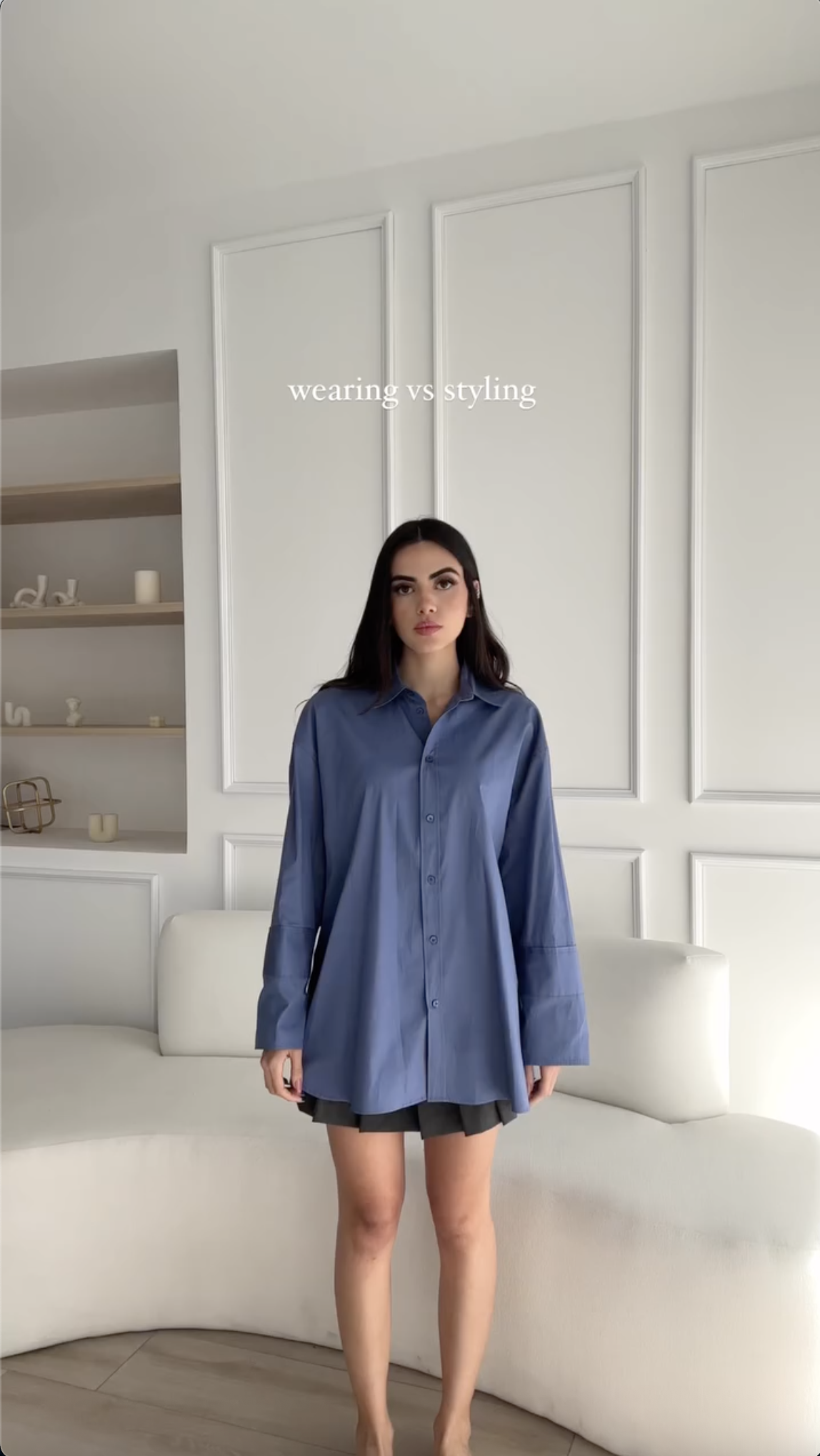
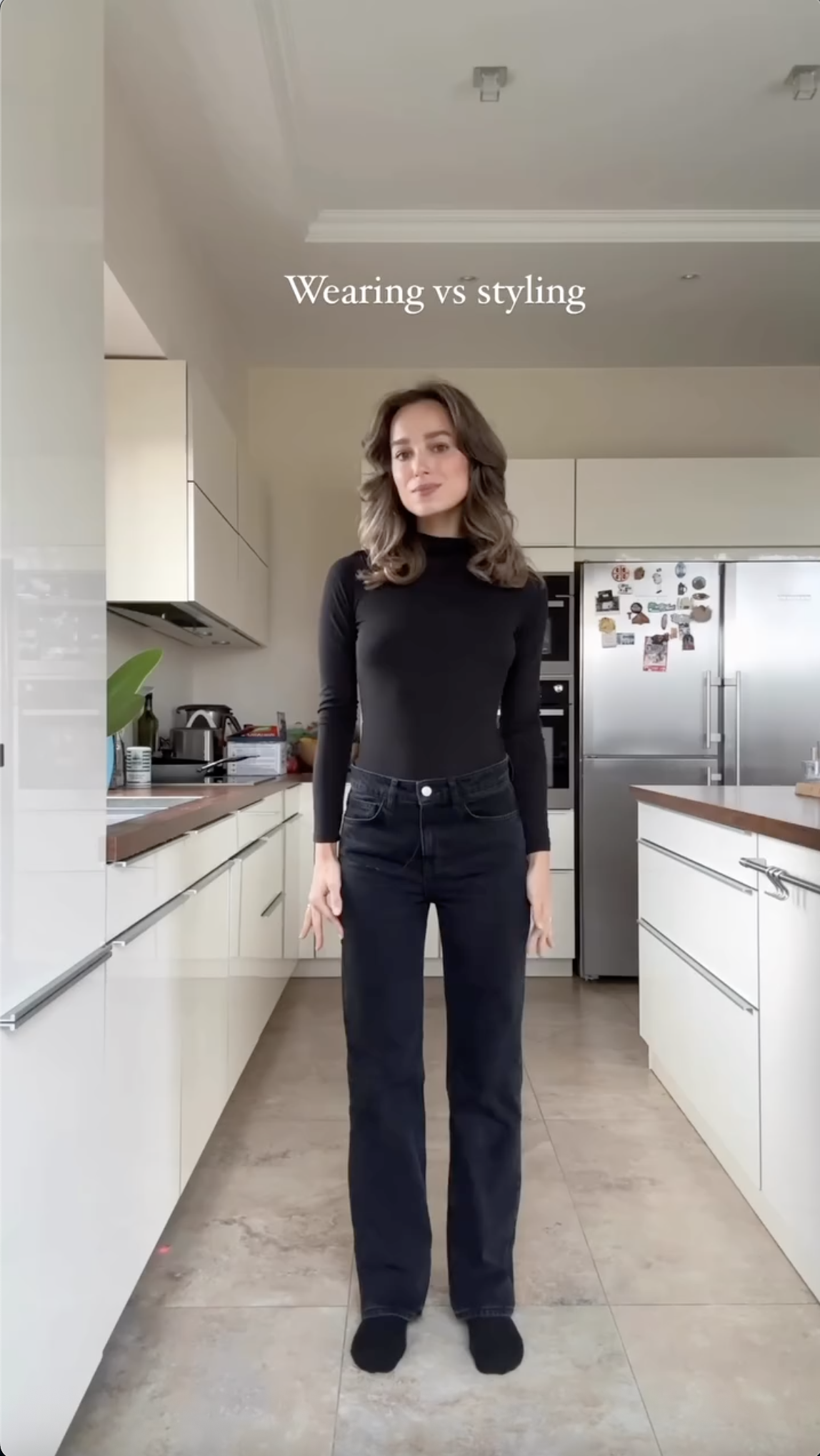
A while back I noticed two outfit-swap reels side by side in my feed. Both had the same "Wearing vs styling" caption stamped across the top. Both opened on a calm, full-body shot of the base outfit. Both walked through the same swap structure. Watching them next to each other, they felt almost like two takes of the same shoot.
And yet one had done five million views, and the other a hundred-and-twelve thousand. Same playbook, very different fate. That is the kind of gap I cannot explain by reading the videos, because they look like the same thing. So I ran both through Jeena and went looking for what the eye-tracking saw that I could not.
The setup
Both videos use the same "Wearing vs styling" format. Same on-screen title in a small serif. Same full-body framing on a phone in a quiet interior room. Same beats: a calm static opener, an outfit change around the 6 to 7 second mark, then a held shot of the styled version.
If you only watch the videos, you cannot tell why they ran 44× apart. The structure is identical, the production polish is similar, neither one is technically broken. The format choice cannot be the explanation, because the format choice is the same.
What changes between them is what happens inside the viewer in the small window where the swap lands. That is what Jeena measures, and that is what the rest of this article is about.
What Jeena saw
The 5M-view version
Gaze concentrated on the subject through the swap
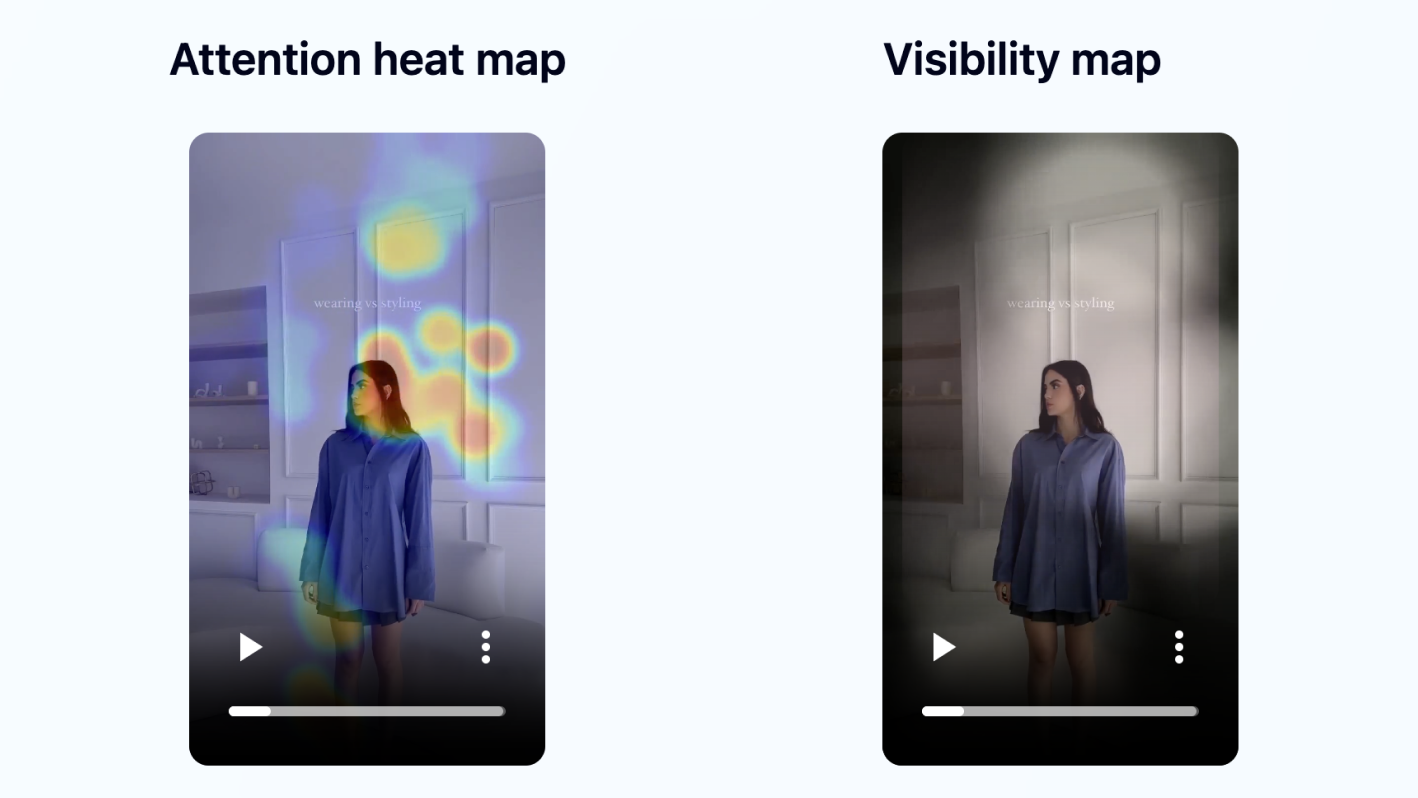
- •In the static opener (0 to 6 seconds), gaze drifted off the body. Jeena flagged the top-of-frame negative space pulling roughly 77% of attention toward the wall above her.
- •At the swap (6 to 7 seconds), gaze snapped back and locked onto the body for the change.
- •Survey responses cluster around "pleasant" and "surprising." The styled reveal registered as a moment, not just a visual.
- •The "wow" reaction concentrated tightly around the swap window and held through the held shot of the styled outfit afterward.
- •Net effect: the static opener leaks attention, but the swap recovers it hard enough to carry the rest.
The 112k-view version
Gaze pulled briefly at the swap, then drifted
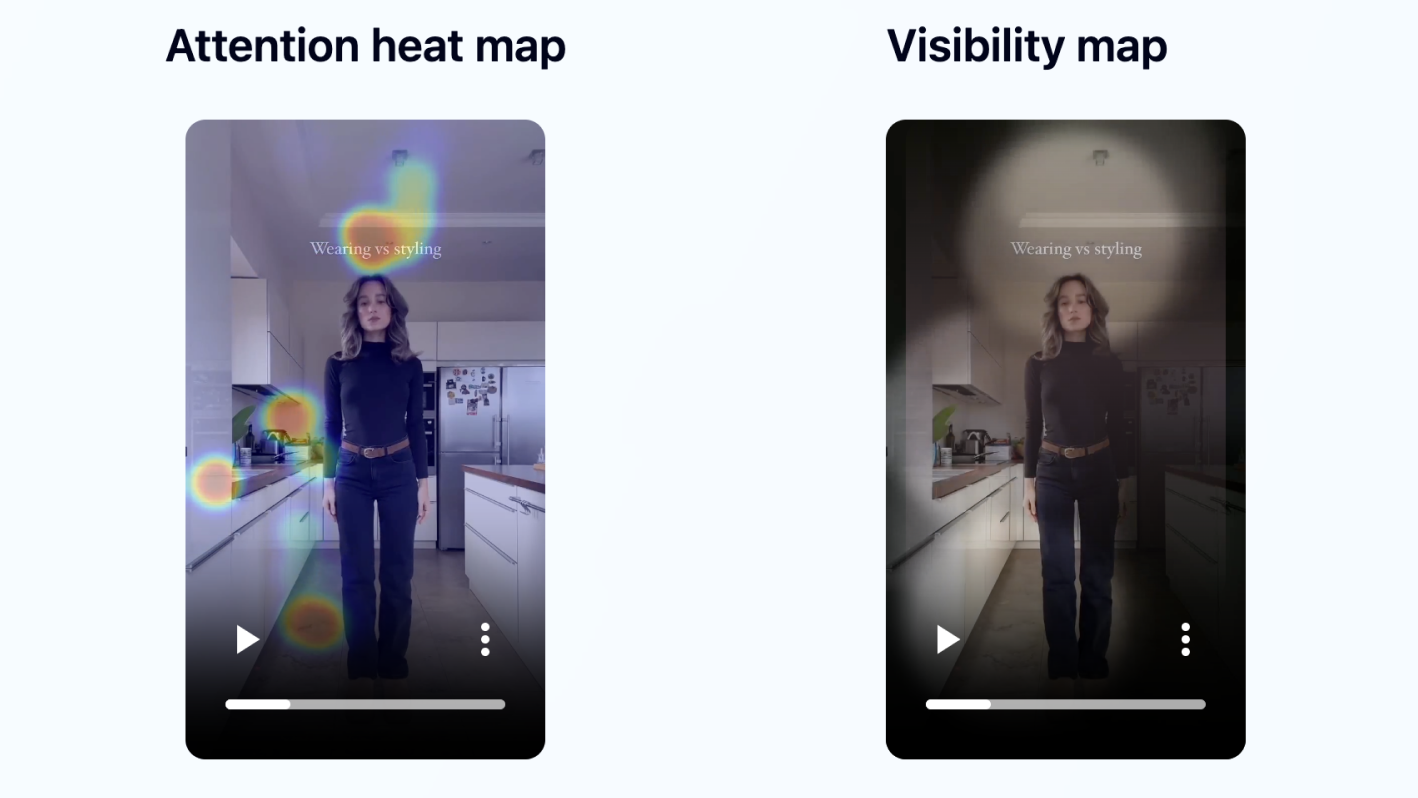
- •Same static-opener gaze drift, but with a different distractor: kitchen ceiling and lights pulling roughly 40% of attention during the opener.
- •At the swap (6 to 7 seconds), gaze briefly snapped to the body, then continued to drift toward the kitchen background while the styled outfit was on screen.
- •Survey responses came back positive overall, but with noticeably more "boring" responses than the 5M-view version.
- •The "wow" reaction registered as a small flash and dissipated. Not a sustained peak.
- •Net effect: the swap moment competed with the background instead of taking it over, so the payoff arrived but did not land.
Same setup, different attention shapes
Both videos used clean smartphone framing, the same on-screen title, similar production polish, and the same fundamental transformation beat. Neither was technically broken. From the outside, they read as two takes of the same idea.
But the eye-tracking shape inside the swap window was not the same. One held, one slipped. That is the part you can only see from inside the viewer.
The swap moment is won or lost by what is behind the body, not by the swap itself
Both creators executed the same swap. Both reveals landed at roughly the same beat. The difference Jeena surfaced was not whether the reveal happened. It was whether viewer gaze stayed on the body once it did.
On the 5M-view version, the background above the subject pulled gaze during the calm opener, but the wall behind her at body height was quiet. When the swap happened, attention had a clean place to land and concentrate. The styled outfit became a moment.
On the 112k-view version, the kitchen cabinets and ceiling lights sat directly in the gaze-competing zone around the body. When the swap happened, attention briefly pulled toward the body, then drifted right back to the visible kitchen geometry. The styled outfit was on screen, but viewer attention was already next door.
Looking at the videos alone, you would never see this. Both reveals are equally well-framed. Both creators did everything "right" by the playbook. The gap shows up only when you measure where the eye actually went in the one-second window where the swap had to land.
The swap moment is won or lost by what is behind the body, not by the swap itself. Same playbook, different background, 44× the distribution.
Four things eye-tracking caught that watching alone could not
Where gaze sat during the calm static opener
Gaze pulled high. About 77% of attention went to the wall above the subject's head, away from the body.
Gaze pulled toward the ceiling and lights. About 40% of attention scattered across kitchen overhead architecture.
Both opener intros leaked attention. Same problem, different distractor. The leak itself was not what decided the gap.
What happened in the one-second swap window
Gaze snapped back to the body at the swap and concentrated there. The styled outfit had a clean focal stage to land on.
Gaze briefly snapped to the body, then drifted right back to the kitchen cabinets and counter behind it during the held shot.
This is the actual decisive moment. The swap arrived in both videos. Only one of them held viewer attention long enough for it to register.
Whether the "wow" reaction sustained
A tight, sustained reaction peak around the styled reveal. Survey responses cluster on "pleasant" and "surprising."
A brief flash, not a sustained peak. Survey responses positive overall, but with noticeably more "boring" responses than the 5M side.
The "wow moment" is not a property of having a reveal. It is a property of viewer gaze concentrating on the subject during it.
What is in the gaze-competing zone around the body
A clean, low-contrast wall sits directly behind the subject's body. Distractors are above her head, outside the swap-window focal zone.
Kitchen cabinets, a fridge, and counter geometry sit directly in the gaze-competing zone around the body, in plane with the swap action.
The background is not a backdrop. It is a participant in the gaze contest the swap is trying to win.
How that shape showed up in distribution
| 5M-view version | 112k-view version | Δ | |
|---|---|---|---|
| Views | 5.0M | 112.0k | ×44 |
| Likes | 320.0k | - | - |
| Comments | 317 | 42 | ×7.5 |
| Shares | 554 | - | - |
| Reposts | 12 | 1 | ×12 |
Three transferable principles for transformation videos
Pick a background based on what is around the body, not what is behind the head
Most location decisions get made on "does this look good." Eye-tracking shifts the question: at the moment of the swap, what is directly competing with the body for attention? On the 112k-view side, the kitchen cabinets and lights sat in the gaze-competing zone around the body, so when the swap arrived, the eye had somewhere else to go. A wall behind the body that is calm at body height beats a beautiful kitchen behind the body where every appliance pulls a glance.
Cut the static opener, or at least cut it short
Both videos lost attention in the 0 to 6 second static intro before the swap. On the 5M version, gaze went to the wall above the subject's head (77% pull). On the 112k version, gaze went to the ceiling lights (40% pull). Jeena recommended the same fix on both: cut directly into the 6 to 7 second reveal window. The static intro is not "building atmosphere," it is leaking the audience you need for the swap.
Mirror the opener into the ending so the loop reads as intentional
A 1 to 1.5 second reverse snap cut back to the base outfit, matching the title and framing, turns a single swap moment into repeated replays. Jeena recommended this on both videos. Match-cutting the final frame to the opening frame makes the algorithm's loop back to the start feel like a flourish, not a glitch.
What this means if you make these videos
The format itself is fine. The "Wearing vs styling" beat works. The reason these two reels split 44× was not whether the swap happened, or whether the title was on screen, or which outfit was on screen. It was whether the swap moment had a clean focal stage to land on, or whether it had to share the frame with a kitchen.
That gap is invisible from outside the viewer. Two creators following the same playbook can end up 44× apart because of a decision about background geometry that does not feel like a decision at all. Eye-tracking is what makes that decision visible before you shoot the next one.
If you are about to film an outfit-swap reel, the question to ask is not "do I have a good reveal?" It is "at the second the swap lands, what else is in my frame to look at?" The smaller that answer is, the harder the swap hits.
Test your transformation video before you ship it
You can run this exact analysis on your own video. Upload it to Jeena. Real viewers watch it on their phones, with the front camera on, and share their impressions in a short survey. Jeena maps where their eyes went, when they raised their eyebrows, and which moments lost them. You get an attention heatmap, a visibility map, a wow-moments chart, a summary of how viewers perceived the video, and three concrete recommendations.
No "schedule a call." No sales rep. Upload, get your report.
Frequently asked
Why did two near-identical outfit-swap videos end up 44× apart?+
Both used the same "Wearing vs styling" format, the same on-screen title, a similar static opener, and the same swap-and-hold structure. Looking at the videos alone, the structure is interchangeable. Jeena's eye tracking surfaced what they did NOT share: where viewer gaze was in the one-second window when the swap landed. On the 5M-view side, gaze concentrated on the body during the swap. On the 112k-view side, gaze had already started drifting back to the kitchen cabinets behind the subject. The "wow" reaction is not a property of the reveal happening; it is a property of viewer attention concentrating on the subject during it.
If the videos look the same, why did this gap show up at all?+
Because the gaze contest is not happening in the frame, it is happening in the viewer's head. The video can be perfectly composed and still lose to a background that pulls attention away from the body during the action. On the 112k side, the kitchen cabinets and counter sat directly in the gaze-competing zone around the body. Visually rich, structurally interesting, and right where the swap was supposed to register. Eye-tracking is the only way to measure this before you commit to the location.
Is the takeaway "shoot in front of a blank wall"?+
No. The takeaway is "know which part of the background is competing with the body at the moment of the payoff, and decide whether you can afford that competition." On the 5M-view side the wall behind the body is calm at body height, but Jeena flagged that the space above her head pulled 77% of gaze during the calm opener. A "boring" wall still leaks attention if it is in the wrong place. You are not optimizing for "nothing in the background." You are optimizing for "nothing in the background ON THE LINE OF THE SUBJECT during the moment that matters."
What is Jeena?+
Jeena is a neuromarketing platform for short-form video. Real people watch your video on their phone with the front camera on. Jeena captures their gaze direction, blink rate, eyebrow raises, and their impressions of the video in a short survey afterward. You receive an AI-powered report with an attention heatmap, a visibility map, a wow-moments chart, a summary of how viewers perceived the video, and three specific recommendations for making the video work harder.
How does Jeena measure viewer attention?+
Jeena uses smartphone front-camera gaze tracking. Each viewer calibrates once, then watches your video. The platform records where their gaze lands frame by frame, flags moments of surprise from facial expression, and combines that with a short impressions survey afterward. The result is a per-second timeline of what real viewers actually looked at and felt, plus a summary of how they perceived the video overall.
Can I test my own transformation video on Jeena?+
Yes. Sign up, upload your video, set a goal (Views, Sales, Pitch, Followers, and so on), and Jeena runs the test with its panel of viewers. The report typically arrives within a day, with an attention heatmap, a visibility map, a wow-moments chart, and three concrete creative recommendations.
How much does it cost?+
A typical test costs around ten euros. See the pricing page for current rates.