The same hook, word for word. One video got 1.8M views, the other 232K.
Two creators taught the same editor trick and opened with the identical hook line. Jeena ran both with real viewers, and the data cleared the suspect everyone blames first.
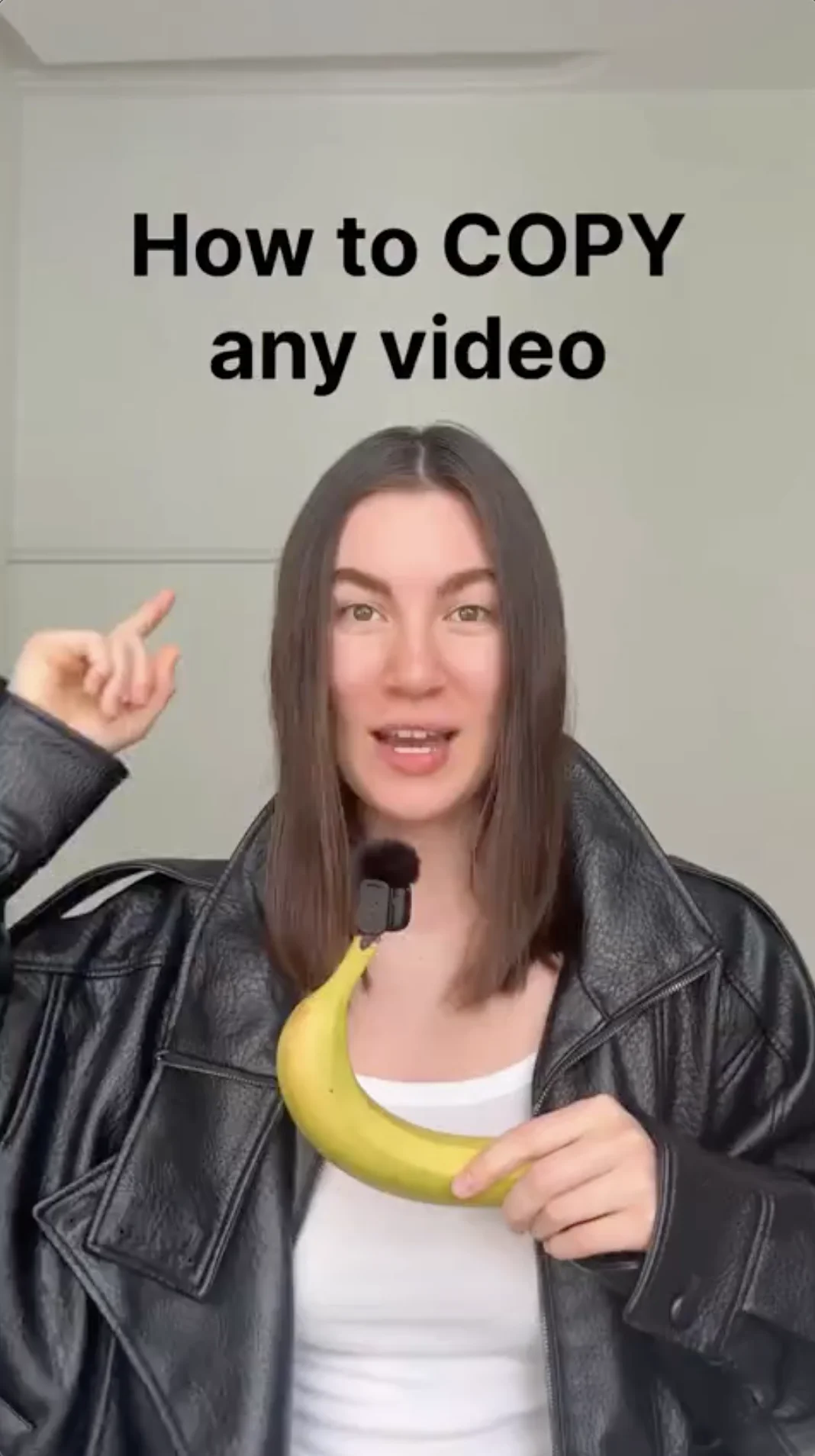
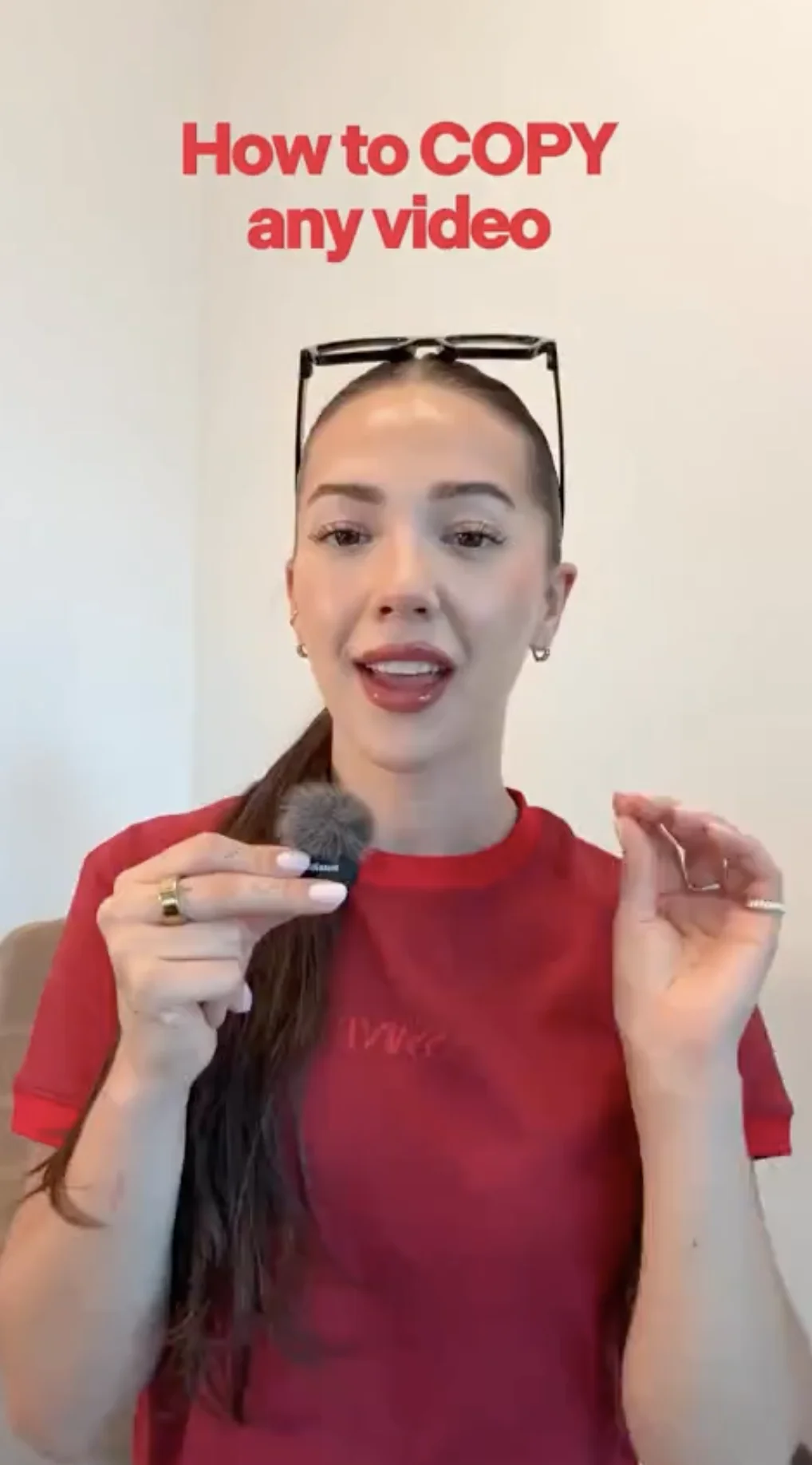
Why I tested this
My feed served me the same tutorial twice in one week. Same trick (how to remake any video you like inside a free editor), same audience of creators, and, this is the part that got me, the exact same opening line: "How to COPY any video". Word for word.
One had 1.8 million views, the other 232 thousand. And I caught myself producing the standard diagnosis on autopilot: the smaller one must have fumbled the hook. Weak delivery, weak staging, something in the first two seconds. That is where everyone looks first, because that is where we are all told the game is decided.
So I ran both through Jeena with real viewers, expecting the gaze data to show me a broken opener. It showed me the opposite, and the actual explanation turned out to be more useful than the one I walked in with.
The setup
Both videos serve the same viewer need: you saw a video you loved, here is how to rebuild it as your own. Both are screen-recorded editor walkthroughs with a presenter, bold step captions, and clean production. The same free editor stars in both. The one structural difference you can see from the outside: one runs 15 seconds, the other 26.
Since the two videos are easy to mix up (same hook, same topic, similar setups), I will call them by their openers: the banana version (the 15-second one at 1.8M views, where the creator holds a banana with a microphone clipped to it) and the red shirt version (the 26-second one at 232K views, red headline, red shirt).
Jeena puts each video in front of real viewers who watch on their phones with the front camera on. It captures where their gaze lands frame by frame, when their eyebrows flag a wow moment, and what they say in a short survey afterward. Then it lines that up against what each video actually did in the wild.
What Jeena saw
The banana version
15 seconds: hook, demo, done
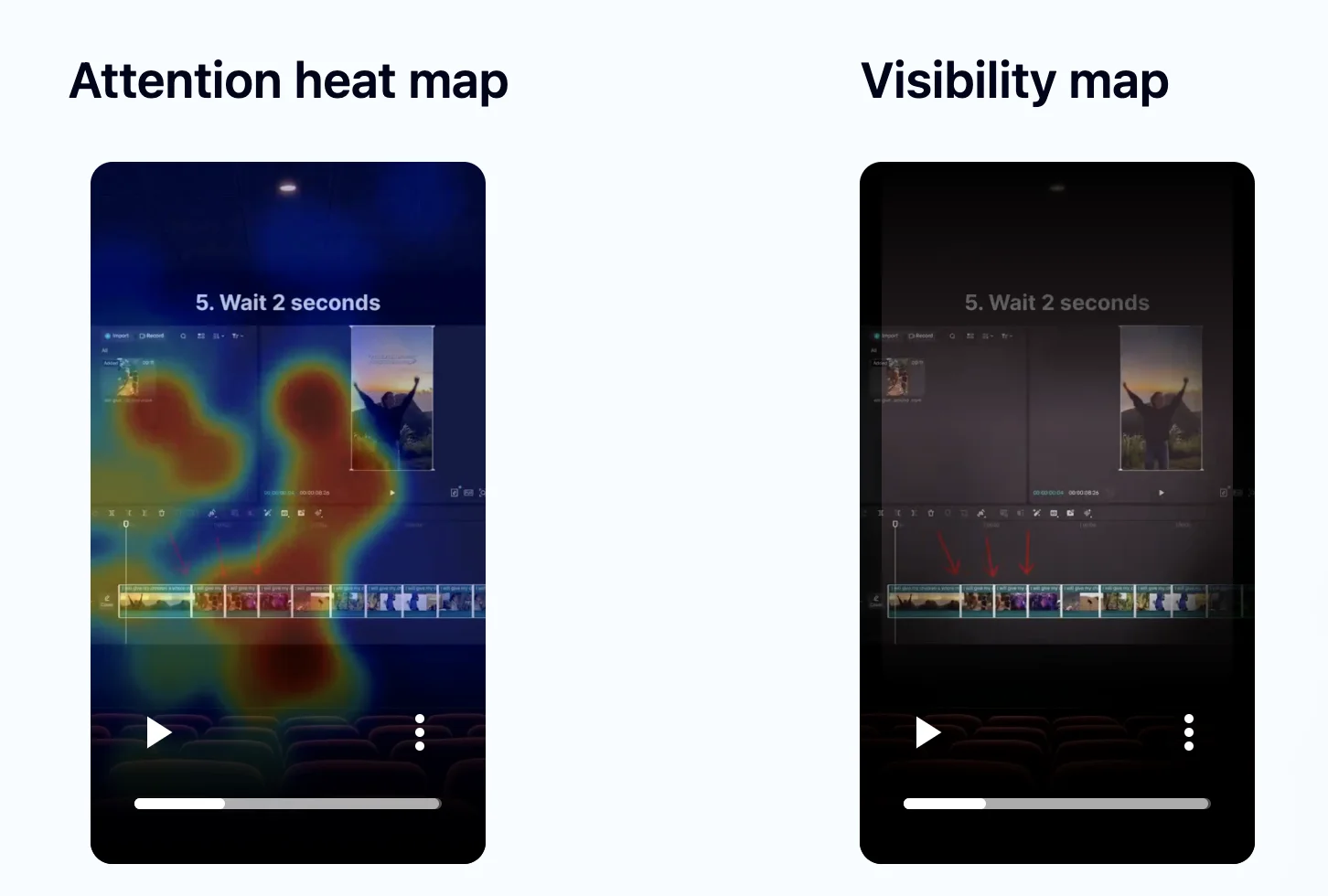
- •The opening headline drew concentrated reading: 19.6% of gaze on the title in the opener, with early facial engagement.
- •The timeline walkthrough at 4-10s held the strongest attention of the video: the clip strip captured 37-41% of gaze through the steps.
- •Bold top-center step headlines kept pulling eyes back throughout, supporting comprehension.
- •Survey tags led with "interesting" and "catchy"; the promise and the payoff both landed.
- •The weak spot is the close: on the final frame, gaze went to the creator's white tank top and a banana prop on the desk instead of the "Save and Follow" line.
The red shirt version
26 seconds: the same hook, stretched
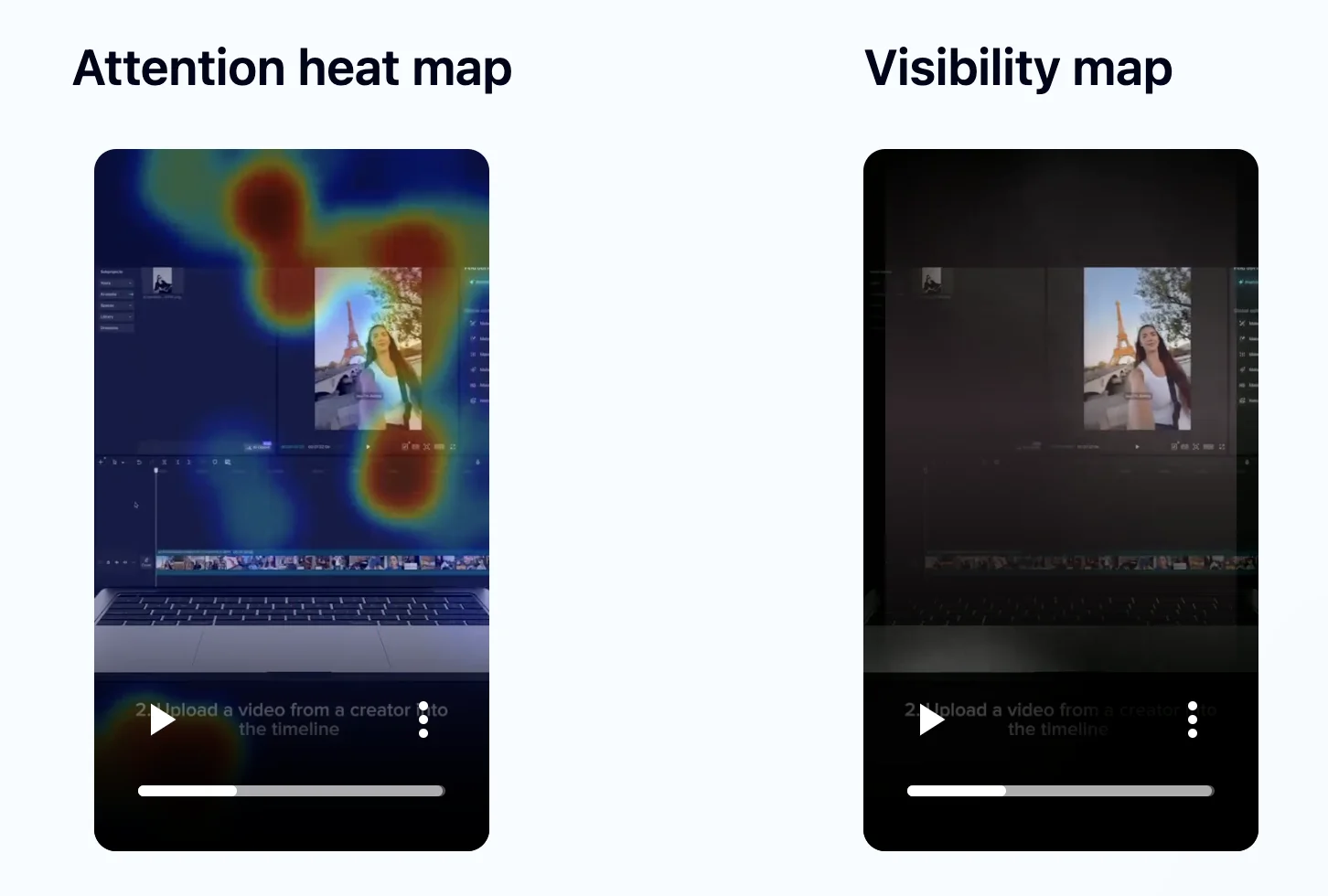
- •The identical hook produced the strongest single reaction measured across both videos: up to 50% of watchers wow-flagged at around 1.3 seconds.
- •The step cards held steady reading attention (11-12% of gaze), and the editor walkthrough climbed to 34.8% by its peak.
- •But sustained focus ran low across the long 8-24s demo block, with gaze repeatedly leaving the screen.
- •The ending is where it collapses: roughly 91% of viewers were looking away during the close, and only about 18% ever glanced at the CTA line.
- •The report's most telling recommendation: publish a separate 8-10 second loop-optimized cut of this video.
The usual suspects have alibis
The hook? Landed on both, and if anything the red shirt version's opener produced the bigger measured reaction. The account size? The banana version comes from the smaller account (about 37K followers versus 52K). The production? Comparable polish, same editor, same step-caption style, positive surveys on both.
Every explanation you could form from the outside fails on this pair. What is left is what the gaze data shows happening after the hook.
What happened in the wild
| The banana version | The red shirt version | Δ | |
|---|---|---|---|
| Views | 1.8M | 232.0k | ×7.6 |
| Likes | 30.4k | 5.4k | ×5.7 |
| Comments | 1.7k | 693 | ×2.4 |
| Reposts | 1,169 | 182 | ×6.4 |
The hook is innocent
This is the finding I did not expect: eye tracking cleared the element everyone blames first. The identical words earned attention both times. What the two videos did with that attention is where 7.6x opened up.
The 15-second version spends the earned curiosity immediately: six seconds of demo where the timeline strip holds 37-41% of gaze, payoff, out. The 26-second version asks the same curiosity to carry a 16-second demo block, and sustained attention runs out before the video does; by the closing seconds, 9 out of 10 viewers are not even looking at the screen. Same fuel, different length of road.
Jeena's recommendation to the longer video says it plainly: cut an 8-10 second version. Not a better hook. Not a new idea. The same video, sized to the attention its hook actually buys.
The hook bought the same attention twice. One video spent it in 15 seconds. The other asked it to last 26.
Three creative choices that drove the split
What the identical hook earned
Concentrated title reading (19.6% of gaze on the headline) and early facial engagement in the first two seconds.
The strongest measured reaction of either video: up to half of watchers wow-flagged at around 1.3 seconds.
The hook worked both times. Whatever separated these videos, it happened after second two, which is exactly where nobody looks when a video underperforms.
How far the curiosity had to stretch
A 6-second demo inside a 15-second video: the highest-attention asset (the timeline strip) fills most of the runtime.
A 16-second demo inside a 26-second video: attention climbs to 34.8% at the peak but sustained focus runs low, with repeated off-screen looks.
Same trick, same demo material. The report's prescription for the longer video is a separate 8-10 second cut built from its own highest-attention moments: the fix is length, not content.
What the last seconds do
The close leaks: gaze lands on the white tank top and a banana prop on the desk instead of the "Save and Follow" line.
The close collapses: about 91% of viewers looking away, roughly 18% ever glancing the CTA.
Neither ending survived contact with real viewers, and both reports prescribe the same repair: a loop-friendly close that mirrors the opener. The winner's weak ending just costs 1 second of 15 instead of 4 of 26.
Three transferable principles for tutorial videos
When a video underperforms, verify the hook before rewriting it
The reflex is to blame the opener, but here the identical hook measurably landed on both videos, one of them producing a 50% wow spike. If you rewrite a working hook, you spend your effort on the one element that was fine. Measure first; the leak is usually downstream.
Size the video to the attention the hook buys, not to the content you have
A hook earns a budget of curiosity, and the budget does not grow because your demo is long. The 15-second version fit inside its budget; the 26-second one overdrew and paid at 7.6x. If the material wants to be long, do what the report told this creator: also ship the 8-10 second cut.
Treat the final frame as the most expensive frame you own
One video ended with gaze on a banana prop, the other with 9 of 10 viewers gone. Endings leak by default. Strip the props, skip the CTA card nobody reads, and mirror your opener so the replay loop does the asking instead.
What this means if you make these videos
The comforting story about short-form is that everything is decided in the first two seconds, because that story comes with a simple fix: write a better hook. This pair breaks the story. The same hook, delivered well twice, produced a 7.6x gap anyway, and the gaze data locates the entire gap after the opener: in runtime the curiosity could not carry, and in endings nobody watched.
So before you post a tutorial, ask the two questions this case actually raises: how many seconds of attention does my opener realistically buy, and does every second after it earn its place? And check your last frame for banana props. Yours will be different, but you have one. I found the mirror-image case, where the same hook text failed because of its staging, in the remake comparison, and the way to check an opener before posting is in how to test a hook.
Find out what your hook actually buys
You can run this exact analysis on your own video. Upload it to Jeena. Real viewers watch it on their phones, with the front camera on, and share their impressions in a short survey. Jeena maps where their eyes went, when they raised their eyebrows, and which moments lost them. You get an attention heatmap, a visibility map, a wow-moments chart, a summary of how viewers perceived the video, and three concrete recommendations.
No "schedule a call." No sales rep. Upload, get your report.
Frequently asked
Why did two videos with the identical hook perform 7.6x apart?+
Not because of the hook. Eye tracking showed the identical opening line landed on both videos: the winner drew concentrated title reading, and the runner-up produced the strongest measured wow reaction of either video. The gap opened afterwards: the winner spends its earned curiosity in 15 seconds with a 6-second high-attention demo, while the runner-up stretches the same curiosity across 26 seconds and a 16-second demo block, and by its closing seconds roughly 91% of viewers were no longer looking at the screen.
Does copying a viral video's hook actually work?+
The hook itself transfers better than most people expect: in this case the copied line earned a strong reaction both times. What does not transfer automatically is the shape around it: total runtime matched to the curiosity the hook buys, a demo compact enough to hold gaze, and an ending that loops instead of leaking. If you copy a video, copy its proportions, not just its first sentence.
What is Jeena?+
Jeena is a neuromarketing platform for short-form video. Real people watch your video on their phone with the front camera on. Jeena captures their gaze direction, blink rate, eyebrow raises, and their impressions of the video in a short survey afterward. You receive an AI-powered report with an attention heatmap, a visibility map, a wow-moments chart, a summary of how viewers perceived the video, and three specific recommendations for making the video work harder.
How does Jeena measure viewer attention?+
Jeena uses smartphone front-camera gaze tracking. Each engager calibrates once, then watches your video. The platform records where their gaze lands frame by frame, flags moments of surprise from facial expression, and combines that with a short impressions survey afterward. The result is a per-second timeline of what real viewers actually looked at and felt, plus a summary of how they perceived the video overall.
Can I test my own video on Jeena?+
Yes. Sign up, upload your video, set a goal (Views, Sales, Pitch, Followers, and so on), and Jeena runs the test with its panel of engagers. The report typically arrives within a day, with an attention heatmap, a visibility map, a wow-moments chart, and three concrete creative recommendations.
How much does it cost?+
A typical test costs around ten euros. See the pricing page for current rates.