Zero views means delivery failed. Here is the checklist.
Five views means people saw it and left. Zero means nobody was given the chance. Those are different failures with different fixes, and the zero one is usually mechanical.

Why I wrote this
Zero-view posts produce the most desperate searches in all of short-form video, and the answers they find are usually about hooks, posting times, and hashtags. Which is advice for a different problem. A video people watched and rejected collects SOME views on every platform. A video at literal zero was never put in front of anyone, and that is almost always mechanical: something between your upload and the feed is switched off.
That is actually good news. Mechanical problems have checklists, and checklists beat vibes. Here is the zero-views checklist in order of likelihood, and at the end, the test for whether your problem is delivery or content, because everything I have written about the higher bands (5 views, the 200 test batch, 300, and 500) assumes delivery is working.
The checklist, most likely first
1. The video is still processing, or silently failed to
The boring cause is the common one. A video can appear posted on your own profile while processing or a failed upload keeps it out of feeds. Delete and re-upload the original file (not a screen recording of it) before doing anything dramatic, and give a fresh upload real time before judging: distribution is not instant.
2. The content tripped an automated filter
Reused or watermarked footage, music flagged in your region, text or imagery that pattern-matches a policy category: any of these can keep a video out of recommendation feeds entirely, sometimes with a notice, often without. Check your account or post status pages (platforms have added these exact screens) and compare: does the zero-view video contain anything your normal videos do not?
3. Account standing, not video quality
If EVERY recent video sits at or near zero, stop debugging videos. New accounts distribute cautiously at first; accounts with recent policy strikes distribute less or not at all; deleted-and-reposted content confuses classification. Check the account health screen, and give a genuinely new account a couple of weeks of normal posting before reading anything into low numbers.
4. Visibility settings you set once and forgot
Private account, followers-only audience, restricted regions, "not eligible for recommendation" toggles, minor-account defaults: settings are the least glamorous and most fixable cause on this list. Audit the post's audience setting and the account's content preferences before blaming any algorithm.
5. Actual zero is not always actual zero
Counters lag, and platforms count views differently (some do not count your own replays, some update in batches). A video at zero for an hour is data lag; a video at zero for days is a delivery problem. Match your patience to the platform's counting, not to your anxiety.
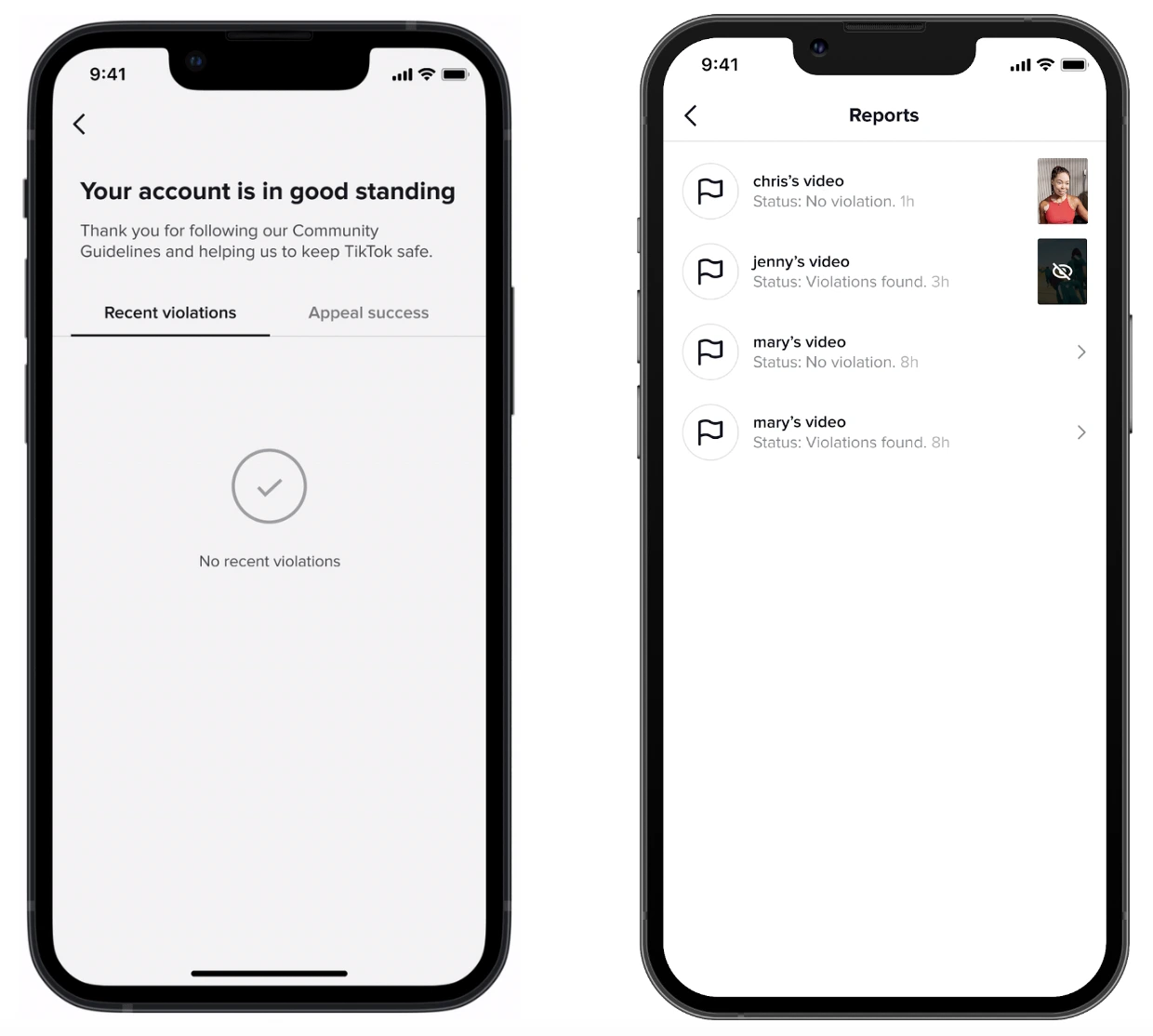
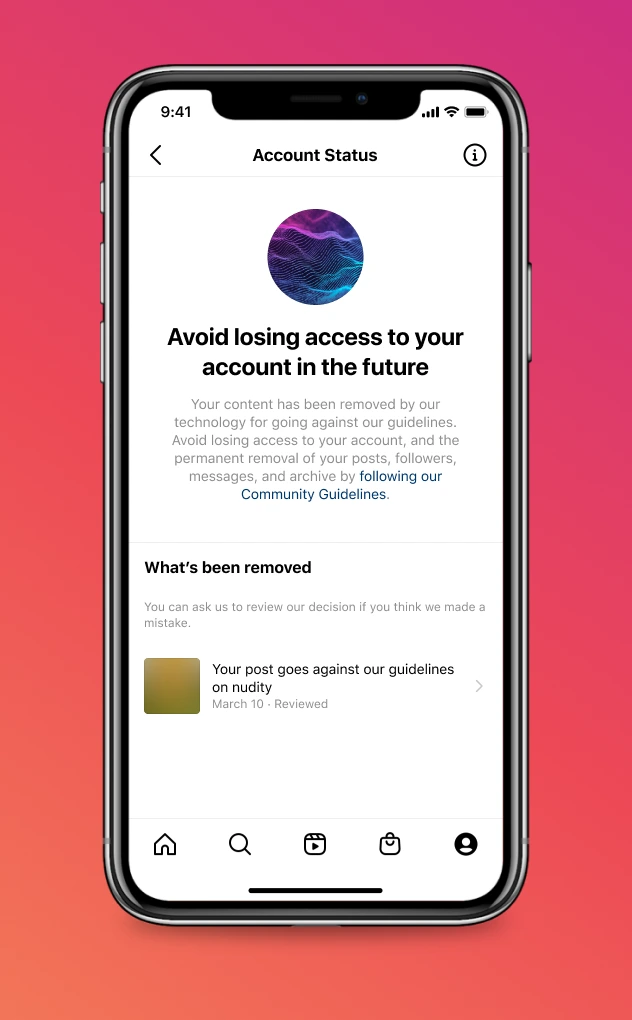
The status screens from steps 2 and 3. Left: TikTok (Settings, then Account, then Account status) with the Reports page. Right: Instagram Account Status (Settings, then Account). Click to open full size. Images: TikTok / Instagram.
The word that finds you at zero views: shadowban
Search "0 views" and the shadowban explanation finds you within minutes. Here is the honest version: platforms genuinely do limit distribution of accounts and content categories, sometimes without notice, and they have also repeatedly denied blanket "shadowbans" while shipping status screens that admit case-by-case restrictions exist. Both things are true, and neither helps you diagnose YOUR video from the outside.
What helps: the checklist above, because restriction-style causes (2 and 3) sit right in it, with checkable status screens. If those come back clean and views still read zero for days, re-upload; if a clean re-upload distributes normally, you had a mechanical failure, not a verdict on your content.
How to tell delivery problems from content problems, permanently
The rule worth remembering: zero is a delivery number, everything above zero is a content number. Once a video collects even a few dozen views, distribution is working and the question changes from "why is nobody seeing this" to "why do the people who see it not stay", which is a question about the first seconds of the video itself.
That second question is answerable before you post, which is the part most creators skip. A pre-publish eye-tracking test puts your video in front of real viewers and shows what their eyes did in those first seconds: whether the opener held anyone, what stole the gaze, whether the ending played to a room that had already left. When we eye-tracked 88 real short videos, 62% had a fixable attention leak the creator could not have seen in analytics, most often the background quietly out-pulling the subject. Delivery you debug with this checklist. Content you debug by watching viewers watch.
Once it delivers, make it land
When the mechanical layer is fixed, the content layer decides everything, and that layer is testable before you post. Upload your video to Jeena: real viewers watch it on their phones with the front camera on, and the report shows an attention heatmap, a visibility map, a wow-moments chart, and three concrete recommendations.
No "schedule a call." No sales rep. Upload, get your report.
Frequently asked
Why does my video have 0 views?+
Literal zero means distribution never started, which points to a mechanical cause rather than a content one: a stuck or failed upload, an automated content flag (reused footage, flagged audio), account standing (new account, recent strikes), visibility settings, or simple counter lag. Work that list in order; content quality only becomes the question once a video is collecting some views and losing viewers, which is a different problem with a different fix.
Is 0 views a shadowban?+
Sometimes distribution restrictions are real, and platforms now expose account and post status screens that show many of them. But "shadowban" as a diagnosis is usually a dead end because it is unfalsifiable from the outside. Check the status screens, compare the flagged video against your normal ones for policy-adjacent content, and test with a clean re-upload. Those three steps resolve most zero-view cases without the folklore.
Should I delete a video that got 0 views?+
If it has sat at zero for days, re-uploading the original file is a legitimate diagnostic: a clean re-upload that distributes normally proves the first upload failed mechanically. Avoid mass-deleting and reposting as a habit, though; repeated delete-repost cycles of the same content can themselves look like spam behavior to classifiers.
What is Jeena?+
Jeena is a pre-publish testing platform for short-form video. You upload a video, and real people watch it on their own phones with the front camera on. Jeena records where their eyes go frame by frame, along with blink rate, eyebrow raises, and a short survey afterward. The report shows an attention heatmap, a visibility map, a wow-moments chart, a summary of how the video came across, and three concrete recommendations.
How does Jeena measure viewer attention?+
Through the front camera of each viewer's own phone. A viewer calibrates once, watches the video, and the platform reconstructs where their gaze landed on every frame, flags surprise moments from eyebrow raises, and collects a short impressions survey at the end. Together that gives a per-second picture of what was watched, what was skipped, and how the video felt.
How much does it cost to test a video on Jeena?+
Around ten euros for a typical test. Current rates are on the pricing page.