The 200-view jail: what it is, why it is not a jail, and what actually opens it
The most famous number in short-form video is a folk statistic. The mechanism behind it is real. Here is the honest version of both, and what the test at the gate actually grades.
Why I wrote this
Every creator meets the number eventually: video after video stopping in the same low band, close enough to 200 that the community named a prison after it. The name does real damage, because jails are about punishment and unfairness, and that framing sends creators hunting for appeals (new accounts, shadowban tests, reposting rituals) instead of preparing for what the number actually is.
Here is the honest mechanics, the folklore audit, and the part I can add from eye-tracking data: what the first-audience test measures, and how to pass it on purpose.
The mechanism, stated honestly
Platforms describe their recommendation systems the same way at the high level: a new video is shown to a small initial audience, and how that audience behaves (finishing, rewatching, engaging, or skipping) determines whether the system spends more impressions on it. That much is public. The exact size of the first audience is not, and the beloved "exactly 200" figure is folklore: observed, plausible, and unpublished. Videos stall at 150, 230, 400. The band varies; the gate is real.
Which reframes the situation completely. A video "in 200-view jail" is a video that RAN the test and produced weak signals: the first audience arrived, sampled the opening seconds, and mostly left. That is painful and useful information at once, because unlike a jail, an exam has content you can study. And the grade applies to that one video only, never to your account. The gate is per-video, which is why one strong video escapes immediately from an account with fifty stalled ones.
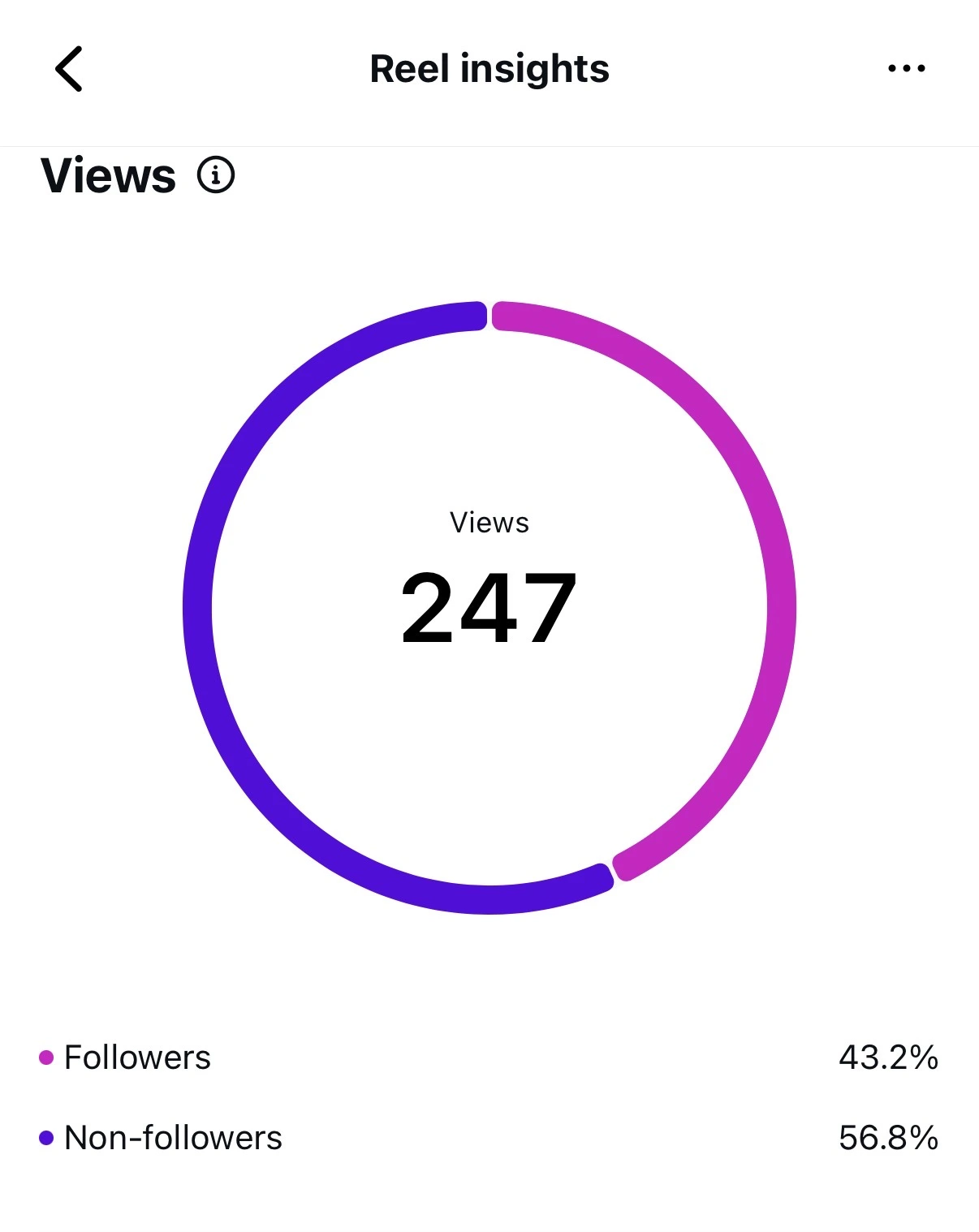
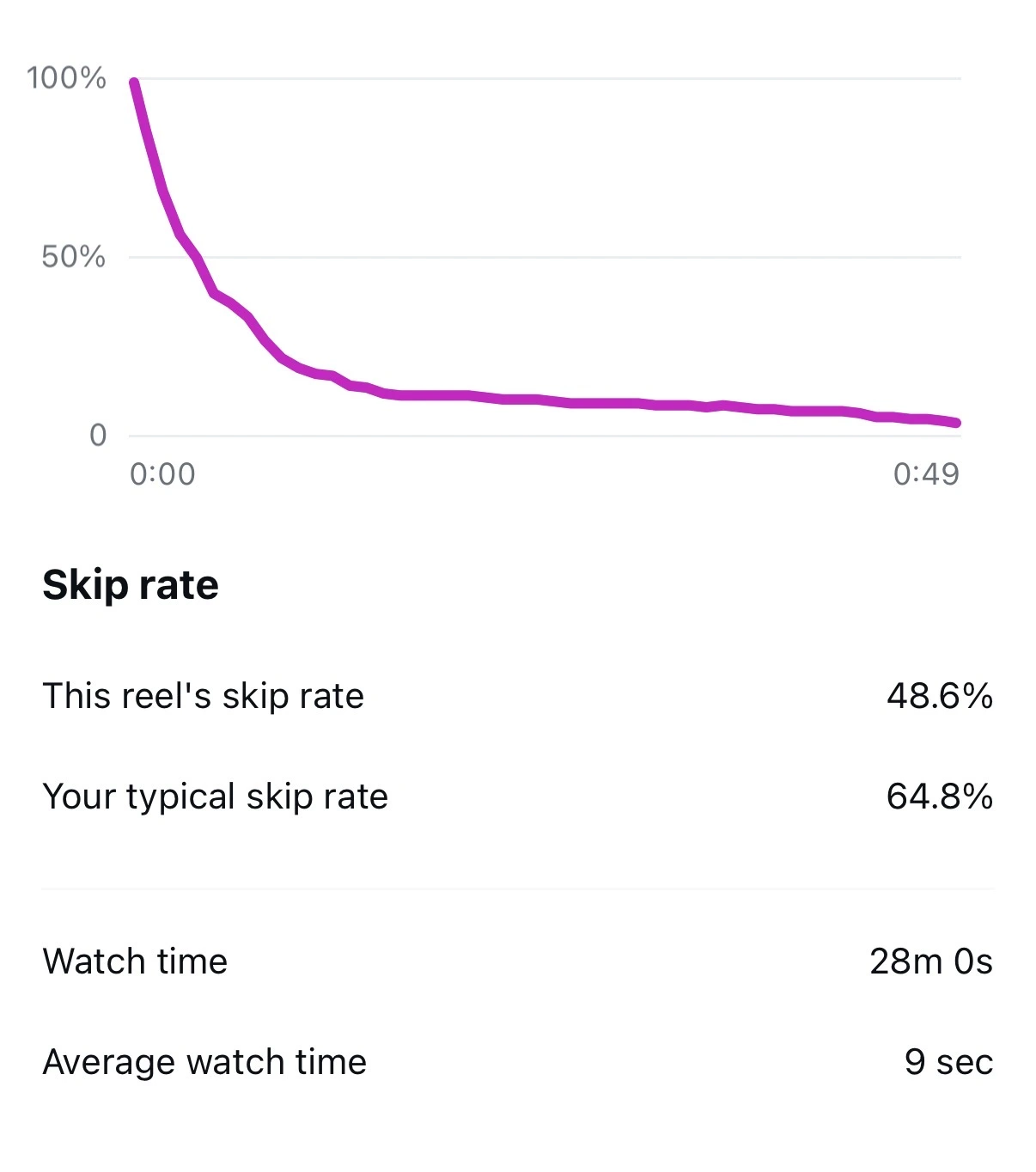
The gate on one of my own reels: 247 views, most of them non-followers (the test audience), an average watch of nine seconds, and distribution stopped there. Click to open full size.
The shadowban audit
The competing explanation is always available: you are secretly suppressed. Honest version: account-level restrictions exist, platforms expose some of them in account-status screens, and they are the right suspect when EVERYTHING changed at once, including your old videos' reach, or after a policy strike. Check those screens; that part takes five minutes.
But the common case looks different: account fine, each new video tested and stalled. That pattern is the gate doing its job on content, and no amount of reposting, account-resetting, or hashtag rituals changes what the first audience does in the opening seconds of the video itself. The uncomfortable, liberating truth of the 200 band: it is almost always about the video, which means it is fixable by you.
What the test actually grades (the eye-tracking view)
The test audience grades your video with their behavior, and their behavior is downstream of their attention. This is where our eye-tracking data gets specific about what those first-audience seconds look like. The opening glance decides most of it: in our audit of 88 videos, attention was set at the first look and held level; there was no slow winning-them-over. A test batch that does not land in second one mostly does not land.
When we eye-tracked 88 real short videos, 62% had a fixable attention leak the creator could not have seen in analytics, most often the background quietly out-pulling the subject. The reasons openers fail are concrete, not mystical. In our published tests: captions sitting on faces, backgrounds out-pulling the subject (backgrounds collect 25.5% of on-screen gaze, more than faces get), scenery beating the actual content, endings playing to viewers who had left. One case is practically a 200-band parable: two videos with the identical hook finished 7.6x apart, and the gaze data cleared the hook text entirely; the gap was runtime and staging. The test batch does not read your caption strategy. It looks, somewhere, for a few seconds. Where it looks decides your number.
Studying for the retake
Accept that the stalled video is a grade, not a hostage
Re-running an old video through the gate rarely works; platforms seldom retest failed content, and delete-repost cycles can read as spam. Bank the lesson, ship the next attempt. The jail metaphor makes people negotiate with a graded exam.
Make second one the whole assignment
The test audience decides at the first glance, so build the opener as if it is the video: subject dead-center, payoff visible or promised with evidence, nothing (caption, logo, decor) competing with the one thing you need seen. Our data says viewers all land on the same spot; make that spot worth it.
Sit the exam privately before sitting it publicly
The maddening part of the gate is learning only from verdicts. You can run the same exam with full answers instead: a panel of real viewers with eye tracking shows you exactly what the test batch will do, where the eyes went, what they skipped, when they left, before you spend the post. Ten euros against another week in the 200 band.
The way to think about the number
Two hundred views is the platform saying: we gave your video a real audience and the audience answered. The folklore turned that into a punishment because punishments are easier on the ego than grades. But grades come with a syllabus, and the syllabus is attention in the opening seconds, which is measurable, testable, and improvable per video.
If your videos keep stopping at the gate, the diagnostic path is short: rule out account restrictions in five minutes, then put the next video in front of tracked viewers and watch the first three seconds through their eyes. The neighboring bands have their own stories: 300 when reach regressed after good times, 500 when you keep almost passing, 5 when there was no real test at all.
Take the test before the algorithm gives it
Upload your video to Jeena before posting. Real viewers watch it on their phones with the front camera on, and the report shows an attention heatmap, a visibility map, a wow-moments chart, and three concrete recommendations: the first-audience exam, with the answer sheet included.
No "schedule a call." No sales rep. Upload, get your report.
Frequently asked
What is the 200-view jail?+
Community shorthand for videos that stop near the size of a platform's initial test audience. Platforms publicly describe showing new videos to a small first audience and extending distribution based on how it behaves; the exact size is unpublished, and "200" is folklore for a band that in practice varies. A video stuck there ran the test and produced weak signals, usually in the opening seconds. It is a per-video grade, not an account punishment.
How do I get out of 200-view jail?+
Not by rescuing the stalled video; platforms rarely retest failed content. First rule out account-level restrictions via the account status screens (five minutes). Then aim everything at the next video's opening seconds, because test audiences decide at the first glance: one dominant subject, a visible payoff, nothing competing for the eye. Testing the video on a tracked viewer panel before posting shows you what the test batch will see, while it is still cheap to fix.
Is the 200-view cap a shadowban?+
Usually not. Restrictions exist and are the right suspect when your entire account's reach changed at once or after a policy strike; platforms expose many of them in status screens now. But the common pattern (account healthy, every new video tested and stalled at a similar band) is the distribution gate grading content. The tell: one genuinely strong video passes immediately from the same "banned" account.
How common are fixable attention problems in short videos?+
Very. When we eye-tracked 88 real short videos, 62% had a fixable attention leak the creator could not have seen in analytics, most often the background quietly out-pulling the subject; captions sitting on faces and payoffs arriving after viewers left were close behind. These are the defects that decide first-audience tests, and each one is typically a one-line edit once it is visible.
What is Jeena?+
Jeena runs your short video past a panel of real viewers before you publish it. They watch on their own phones with the front camera on, and the platform records gaze direction, blink rate, and eyebrow raises, then asks a short survey. The report includes an attention heatmap, a visibility map, a wow-moments chart, a summary of how viewers perceived the video, and three concrete fixes.
How does Jeena measure viewer attention?+
By watching the watcher. After a one-time calibration, the front camera tracks where each viewer's eyes land, frame by frame. Eyebrow raises mark the moments that genuinely surprised someone, and a post-watch survey captures what the video felt like. Stacked across the panel, that becomes a second-by-second attention record of your video.
How much does it cost to test a video on Jeena?+
About ten euros per typical test; the pricing page has current numbers.